Growing Vegetables Reading Comprehension Passages and Questions Grades 1-5
63 pages exploring seeds, garden tools, plant nutrition, beneficial insects, and soil health across 10 science reading comprehension passages for grades 1-5.
Instant PDF download after payment, also saved in My Library.
Secure checkout by card or crypto.
Use it at home or in one classroom. Read the license
Details
- File format
- Pages
- 63
- Page size
- A4
- Files
- 3
- Grades
- 1st–5th
- Answer key
- Included
In this download 3 files
- PDF Growing Vegetables Reading Comprehension Passages Grades15 Answer Key 22 pages
- PDF Growing Vegetables Reading Comprehension Passages Grades15 Lesson Plan 1 page
- PDF Growing Vegetables Reading Comprehension Passages Grades15 Worksheet 40 pages
Sample pages
Growing Vegetables Reading Comprehension Passages for Grades 1-5
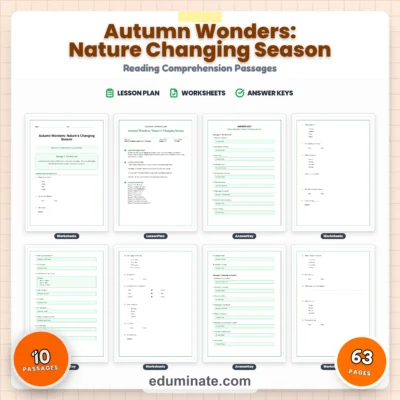
Watching a vegetable seed sprout and mature into edible produce provides elementary students with an authentic look at biological cycles. Children learn how green plants transform sunlight, air, water, and soil minerals into crisp vegetables that nourish human bodies. This structured unit of growing vegetables reading comprehension passages introduces elementary learners to the science of horticulture, soil enrichment, and plant biology. Across 63 pages of printable classroom resources, students investigate seed anatomy, root structures, beneficial garden organisms, and community agriculture.
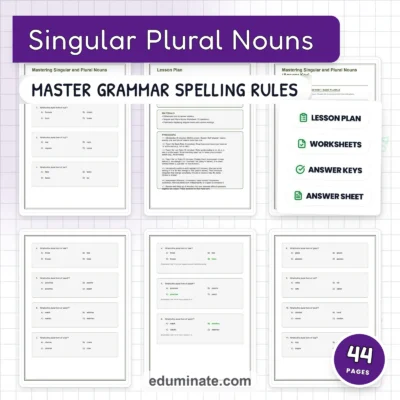
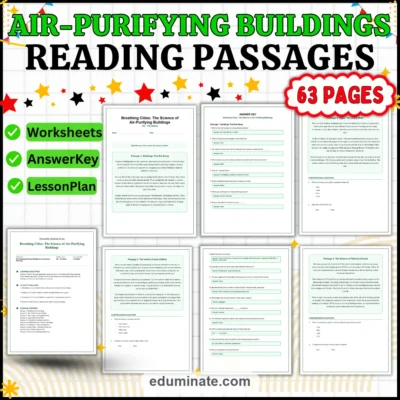
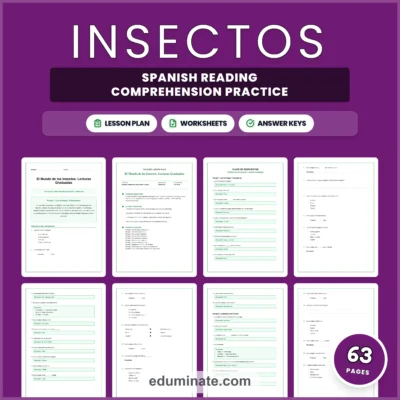
Teachers integrate these growing vegetables reading comprehension passages into spring science units, life cycle investigations, and non-fiction literacy blocks. The reading passages present clear biological facts alongside practical gardening wisdom that students can observe in classroom window boxes or backyard gardens. Each text includes dedicated student question pages featuring multiple-choice items, True or False checks, and context vocabulary matching exercises. Educators benefit from 22 pages of thorough answer keys that make checking student responses swift and accurate. An included 1 page teacher lesson plan provides pacing recommendations, class discussion starters, and review tips across 150 minutes of instructional time.
Plant Biology and Vegetable Gardening Across Ten Passages
The ten reading selections in this resource follow a progressive path from single seed pots to collaborative neighborhood farming:
Passage 1: Ahmed’s First Seed describes planting a small seed in a sunny windowsill container, watering gently, and waiting for the first green leaf. Passage 2: Tools for the Garden explores garden trowels, hand rakes, watering cans, and protective gloves that keep gardeners safe. Passage 3: What Plants Need examines the four basic necessities for plant survival: sunlight, clean water, fresh air, and fertile soil. Passage 4: Root or Leaf? explains plant anatomy by classifying common crops into edible roots like carrots, leaves like spinach, and stems like celery. Completing these seed to harvest and garden tools reading worksheets helps students connect botanical terms with their dinner plates. Passage 5: The Tomato Plant details tomato flowering, yellow blossom pollination, green fruit formation, and final ripening. Passage 6: Good Bugs and Bad Bugs contrasts destructive aphids with beneficial ladybugs and burrowing earthworms that naturally fertilize soil. Working through these photosynthesis and plant parts reading activities enables students to understand balanced garden ecosystems. Passage 7: Making Soil Healthy investigates organic compost, decayed leaves, and earthworm castings that supply vital nitrogen and phosphorus. Passage 8: The Community Garden describes neighbors sharing tools, building raised garden beds, and dividing fresh harvests. Answering these community garden and healthy soil comprehension questions reinforces agricultural vocabulary and social collaboration themes. Passage 9: How Plants Make Food introduces basic photosynthesis, explaining how chlorophyll in green leaves uses sunlight to make plant sugars. Passage 10: Keeping the Soil Strong explores crop rotation, natural mulch blankets, and cover crops that protect topsoil across changing seasons. Practicing with these growing vegetables reading comprehension passages builds scientific curiosity and sharpens informational reading skills.
Every passage inside this grades 1-5 vegetable gardening reading comprehension packet directs learners to return to the text for specific facts. Students practice identifying main ideas, analyzing plant growth steps, and understanding environmental cause and effect relationships.
Classroom Application and Differentiation Ideas
Teachers use these growing vegetables reading comprehension passages across a variety of elementary teaching environments. Primary grade teachers can read the early seed and garden tool passages aloud during small-group literacy instruction. Upper elementary instructors can use the photosynthesis, soil nutrients, and crop rotation passages for independent science research or homework assignments. The clean worksheet formatting prints smoothly on standard paper without decorative ink waste. These printables also make dependable emergency sub plans during life science units.
Find additional botany and Earth science resources in our reading comprehension collection or explore plant printables in the worksheets section. You can also view our complete educational catalog across the school shop catalog.
Print on standard paper and you are ready to teach.
Frequently Asked Questions
What grade levels does this vegetable gardening unit target?
This unit targets students in grades 1 through 5. The ten reading passages begin with basic seed planting and garden tools, then progress into photosynthesis, plant anatomy classifications, and soil nutrient management.
How many total pages and passages are included in the download?
You receive 63 pages in total. The resource contains 10 informational science passages, 40 pages of student worksheets, 22 pages of complete answer keys, and a 1 page teacher lesson plan.
Which specific plant science concepts do students study in these worksheets?
Students explore seed germination, garden tool safety, plant survival needs, edible plant parts, tomato life cycles, garden insects, compost formation, community gardens, photosynthesis, and topsoil preservation.
Are full answer keys included with these growing vegetables reading comprehension passages?
Yes. The download provides 22 pages of complete answer keys covering every multiple-choice item, True or False statement, and vocabulary matching exercise for fast, accurate grading.