
Vegetable Coloring Pages: Printable Fruit and Veggie Packs
FreeFree printable for this topic: Free Healthy Food Coloring Pages | Fruits and Vegetables Printable for KidsGet it free
Vegetable coloring pages give young children a friendly way to meet carrots, broccoli, tomatoes and other produce before they meet them on a lunch tray. The packs below mix vegetables with fruit, since the shop’s sets are built around healthy food as a whole. They suit preschool to about second grade, with a few options for older colorers. For a first try, start with a free pack and see which style your class likes.
These are the page types you will find in the vegetable and fruit packs:
- Single large vegetables such as a carrot, a head of broccoli or a tomato.
- Root vegetables with leafy tops, such as beets, radishes and parsnips.
- Fruit pages that sit beside the vegetables, such as pineapples, pears and grapes.
- Cartoon food characters with simple faces for the youngest children.
- Food group pages that tie into a nutrition lesson.
- Fuller garden or harvest scenes for children who finish early.
In this article (7 sections)
Free vegetable coloring pages
Two free packs let you try the theme at no cost. The Free Healthy Food Coloring Pages pack is an 8-page PDF with 4 coloring pages of broccoli, apple, carrot, avocado, toast and strawberry characters, plus a welcome page and a coloring tips page. The Free Healthy Eating Coloring Pages pack has 16 pages of cartoon apples, carrots, broccoli and avocados for preschool to early elementary. Both list A4 files that print on US Letter with Fit to page.
A free pack takes an email address, which opens a free account and keeps the file in My Library. The paid packs add many more pictures, which helps when a whole class colors at once, and they bring more kinds of produce than the free samplers show. Our guide to healthy food coloring pages goes through the whole range if you want more detail.
Fruit and vegetable packs by size
All of the packs below are PDFs with line art for coloring. Page counts include a cover or a tips page in some cases, so the number of actual coloring pictures is a little lower than the page total.
Small packs for a short unit
| Pack | Pages | Price |
|---|---|---|
| Fruit and Veggie Coloring Pages Healthy Food | 22 | $3.99 |
| Healthy Eating Coloring Pages Kawaii Fruit and Veggie | 30 | $4.99 |
| Avocado Coloring Pages | 20 | $3.00 |
The 22-page pack has 18 illustrations, including ripe bananas, spiky pineapples and freshly pulled carrots, and it prints on US Letter with Fit to page. The 30-page pack shows cheerful kawaii-style food characters, and it has a welcome page and a coloring tips page. The avocado pack is a single-subject set with sixteen avocado characters in different poses, which is handy if you want a quick page for early finishers.
Medium packs for a full week
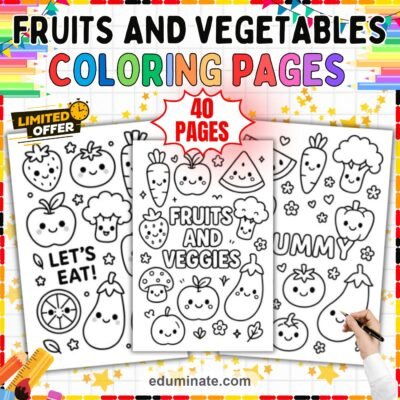
The 50-page pack has 46 line art pictures that include beets with bushy leafy greens, pineapples, grapes and pears. It prints on US Letter with Fit to page and suits preschool and early elementary nutrition lessons. The 40-page Fruits and Vegetables pack lists Pre-K to 2nd grade and shows apples, carrots, broccoli crowns, watermelon slices and tomatoes. The 40-page food groups pack has 36 designs, each paired with a short slogan such as Healthy Eating, and it is aimed at preschool and kindergarten.
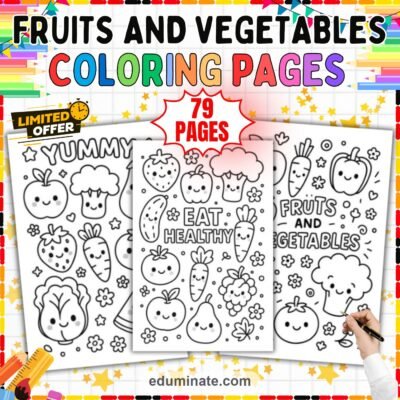
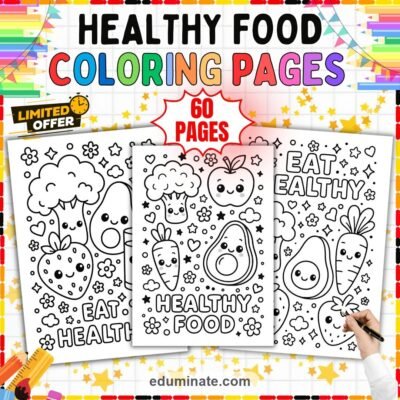
The 60-page kawaii pack has 60 coloring sheets of round-faced broccoli, carrot, apple, avocado, pineapple, pear, tomato and cabbage characters, plus an 8-page preview file. The 79-page printable pack lists Pre-K to 2nd grade and covers apples, bananas, carrots, broccoli and berries.
Large packs for a whole term
- The Fruits and Veggies Coloring Pages Healthy Food Art pack has 100 pages for $11.99, with 96 illustrations of broccoli crowns, radishes, pineapples, citrus wedges, parsnips and cauliflower. It prints on US Letter with Fit to page, and its description ties it to health lessons and garden science.
- The Healthy Food Coloring Pages 100 Pack has 100 sheets for $11.99 with smiling fruit and vegetable characters, from broccoli and avocado to strawberries and carrots.
- The Nutrition Coloring Pages Healthy Eating pack has 100 pages for $11.99 and also covers grains and dairy, so it suits a food groups unit.
The shop has no bundle for fruit and vegetable pages, so these are all single packs.
Vegetable pages without faces
Many of these packs use cartoon characters with big eyes and smiles. Children often love them, but some teachers want plain produce for a science lesson. The 22-page pack and the 100-page Fruits and Veggies pack describe more realistic line art, with textured pineapples, bananas with peel detail and root vegetables such as radishes and parsnips. Read the description before buying. A page of plain carrots and radishes is easier to compare with the real vegetables you bring in.
Classroom uses for vegetable coloring pages
Rainbow plate
Ask each child to color a plate with foods from at least four different colors. Then write the name of each food beside it. This works well in a food groups week, and it gives you an easy way to see which foods children recognize.
Taste and tell
Bring in a small plate of cut raw vegetables if your school allows it, and let children color the one they tasted. Afterward they can write one word about the taste, such as crunchy, sweet or bitter. Check allergies first.
Grow a garden unit
Pair the root vegetable pages with a simple bean sprout in a clear cup. Children can color the vegetables, then draw the sprout each day. The pages give the unit a visual anchor, and the cup gives it a real result.
Sorting and counting
Print a mixed page of fruits and vegetables and ask children to circle the vegetables in one color and the fruits in another. Younger children can count how many of each. Older children can write a sentence comparing the two numbers.
Writing prompts
- Which vegetable would you plant in a garden, and why?
- Write the steps for washing a carrot.
- Describe a vegetable without saying its name and let a partner guess.
- Name two vegetables that grow underground.
Matching words and pictures
For children who are learning English food words, pair a colored page with the Fruits and Vegetables Flashcards pack. It has 48 pages for $5.99, with six to nine pictures per page and one printed word under every picture. Children color a carrot, then find the word carrot on a card.
Fine motor and focus tips
- Ask children to color the leafy tops and stems first, then the main body of the vegetable.
- Show a real carrot or tomato and let children pick the colors they see.
- Offer crayons for large shapes and colored pencils for small details, which gives hands both light and firm practice.
- Set a short timer for restless children and ask them to finish one vegetable before they start another.
- Keep a tray of finished pages on the table so children can see how many they have done.
Coloring small leaves, roots and seeds also builds fine motor skills in a way that thicker shapes do not. If a child tires, let them switch to a bigger page and return to the detailed one later.
Which pack for which age
Preschool and kindergarten
Choose the cartoon food packs with one big picture per page. The 40-page Fruits and Vegetables pack and the 22-page pack are good starting points, and both have clear shapes. Accept any colors, since a blue carrot is a fine carrot.
First and second grade
Children can handle the root vegetable pages and the food group pages. Ask them to color the leaves and the background, and to write the name of the vegetable at the bottom.
Third grade and older
The 100-page Fruits and Veggies pack has detailed line art that holds older children. They can add shading, label parts of the plant, and write a short paragraph about how the vegetable grows.
Frequently asked questions
Are there free vegetable coloring pages?
Yes. The Free Healthy Food Coloring Pages pack has 4 coloring pages and the Free Healthy Eating Coloring Pages pack has 16 pages. A free pack takes an email address, which opens a free account and keeps the file in My Library.
Which pack has the most vegetables?
The 100-page Fruits and Veggies pack lists broccoli, radishes, parsnips and cauliflower among its 96 illustrations. The 50-page pack adds beets, and the 60-page pack includes tomato and cabbage characters.
Can I print these on US Letter paper?
Most of the packs named here list A4 files that print on US Letter with Fit to page. The 40-page Fruits and Vegetables pack and the 79-page printable pack do not list a page size, so check the product page before you print a class set.
What age are these pages for?
Most are written for preschool through about 2nd grade. The kawaii sets and the Healthy Food 100 Pack are listed for all grades, so they also work for mixed groups.