Bat Conservation Reading Comprehension Passages and Printable Science Packet
This 63 pages packet delivers bat conservation reading comprehension across ten detailed wildlife science passages. Students explore bat houses, echolocation, pest control, and habitats with complete answer keys.
Instant PDF download, no card needed.
Keep it in My Library with a free account.
Use it at home or in one classroom. Read the license
Details
- File format
- Pages
- 62
- Page size
- A4
- Files
- 2
- Grades
- 3rd–4th
- Answer key
- Included
In this download 2 files
- PDF Bat Houses and Conservation Our Nighttime Neighbors Answer Key 21 pages
- PDF Bat Houses and Conservation Our Nighttime Neighbors Worksheet 41 pages
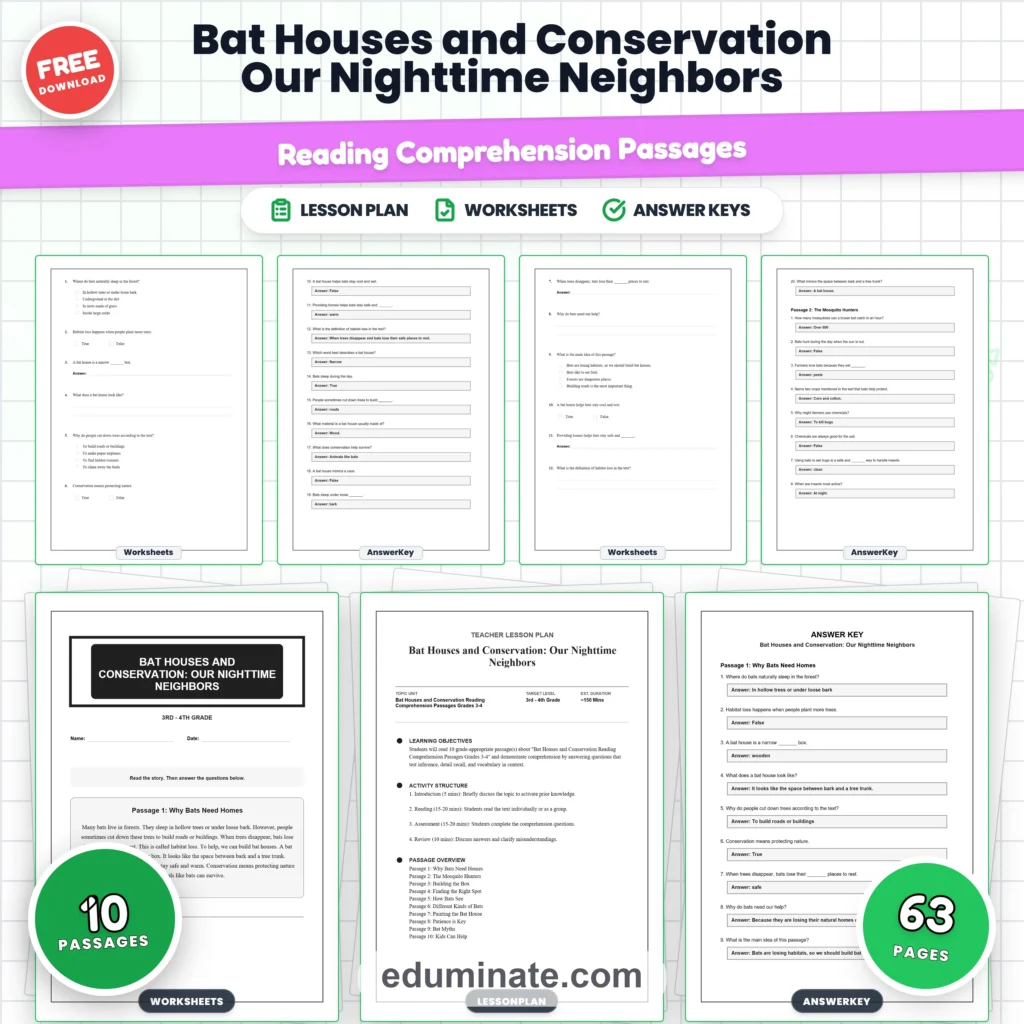
Engaging Bat Conservation Reading Comprehension for Grades 3 to 4
Introduce elementary students to nocturnal wildlife biology, habitat preservation, and ecosystem balance with this free printable unit on bat conservation reading comprehension. Across 63 pages of structured printables, learners explore why native bat populations require artificial roosting boxes, how aerial insectivores consume nocturnal agricultural pests, and how echolocation guides night flight. This resource connects wildlife science vocabulary, environmental stewardship, and essential literacy practice to build informational reading stamina in third grade and fourth grade classrooms.
Informational Passages on Wildlife Habitats and Night Ecology
Each of the ten reading selections provides clear factual explanations designed to expand scientific vocabulary and improve reading stamina. Students investigate why woodland deforestation reduces natural hollow tree roosts, examine how insect eating bats save farmers billions in crop protection, and analyze how communities can install wooden roosting shelters. These high interest science topics spark classroom discussion while helping learners practice with free bat reading comprehension worksheets during regular science lessons, guided reading groups, or independent literacy rotations.
The ten reading selections explore these essential wildlife science topics:
- Why Bats Need Homes: Learn how urban development destroys natural forest roosting trees and why artificial bat houses provide safe shelter.
- The Mosquito Hunters: Discover how small brown bats catch hundreds of flying insects per hour to provide natural pest management.
- Building the Box: Examine narrow wooden chamber dimensions, grooved landing pads, and tight spacing that mimics natural tree bark crevices.
- Finding the Right Spot: Study optimal installation locations, including high placement on wooden posts that receive direct morning sunlight.
- How Bats See: Understand acoustic echolocation, sound wave bounce patterns, and sensitive ears that navigate dark night environments.
- Different Kinds of Bats: Compare solitary tree dwelling species with colonial roosting varieties found across North American regions.
- Painting the Bat House: Discover why exterior paint shades match regional temperature zones to keep roosting chambers warm and dry.
- Patience is Key: Learn why wild bat colonies often take several seasons to locate, explore, and permanently occupy new shelter boxes.
- Bat Myths: Separate folklore from factual biology regarding rabies transmission rates, blindness misconceptions, and nocturnal behavior.
- Kids Can Help: Identify practical student actions including planting night blooming garden flowers and supporting local forest conservation.
Targeted Questions and Active Comprehension Practice
Every reading selection connects directly with dedicated student worksheet pages containing multiple choice questions, true or false statements, fill in the blank vocabulary prompts, matching exercises, and short written answers. These varied question styles challenge pupils to cite explicit text facts, explain ecosystem food webs, and evaluate animal conservation strategies. Practicing with our bat houses reading comprehension passages supports steady progress in bat conservation reading comprehension throughout the school year.
These varied assessment tasks give teachers dependable diagnostic feedback on student reading comprehension. Because each passage includes focused comprehension items, educators can monitor mastery across multiple instructional days. Regular work with nocturnal animals reading comprehension activities strengthens factual recall, scientific reasoning, and written explanation skills in elementary classrooms. These printables also provide valuable bat conservation worksheets for elementary science units.
Teacher Support and Practical Classroom Integration
This teaching unit for bat conservation reading comprehension includes an organized 1 page teacher lesson plan detailing learning objectives, suggested pacing, and activity procedures. The twenty-one pages of answer keys make grading quick and dependable, whether used for teacher evaluation or student self checking. These printable worksheets fit neatly into morning work, science units, emergency substitute plans, or weekly homework packets.
Looking for more grade-appropriate reading materials? Discover our wide selection in the reading comprehension section and find free resources in our freebies collection. You can also view our full catalog at the Eduminate shop. Adding this thorough science unit to your curriculum delivers meaningful literacy enrichment through structured bat conservation reading comprehension activities.
Frequently Asked Questions
What grade levels are these bat conservation passages designed for?
This bat conservation reading comprehension resource is designed for students in grades 3 and 4. The passages feature accessible life science vocabulary, clear explanations of animal habitats, and structured comprehension questions suited for elementary readers.
How many total pages and reading passages are included in this packet?
This packet includes 63 total pages. It features 10 informational passages across 41 student worksheet pages, a 1 page teacher lesson plan, and 21 pages of complete answer keys for rapid grading.
Are answer keys provided for all student questions?
Yes, complete answer keys are included for every question across all ten passages. The 21 answer key pages provide clear solutions, making it simple to grade student work or facilitate independent self checking during bat conservation reading comprehension lessons.