Cleaning the Environment Reading Comprehension Passages and Questions Gr 2-7
62 pages covering recycling, waste reduction, clean water, and community stewardship across 10 reading passages for grades 2-7.
Instant PDF download after payment, also saved in My Library.
Secure checkout by card or crypto.
Use it at home or in one classroom. Read the license
Details
- File format
- Pages
- 62
- Page size
- A4
- Files
- 3
- Grades
- 2nd–7th
- Answer key
- Included
In this download 3 files
- PDF Cleaning the Environment Reading Comprehension Passages Lesson Plan 1 page
- PDF Cleaning the Environment Reading Comprehension Passages Answer Key 40 pages
- PDF Cleaning the Environment Reading Comprehension Passages Worksheet 21 pages
Sample pages
Cleaning the Environment Reading Comprehension Passages for Grades 2-7
Kids notice litter at parks, overflowing trash cans, and plastic bottles washing onto riverbanks. They often ask what regular people can do to fix those problems. This set of cleaning the environment reading comprehension passages gives students concrete answers rooted in practical science and community action. Inside this 62 pages packet, you will find 10 nonfiction passages that teach students about waste sorting, composting, ocean plastics, and local stewardship. Students read the texts, complete comprehension questions that test factual recall and inference, and learn essential environmental science vocabulary.
I designed these cleaning the environment reading comprehension passages to serve grades 2 through 7. The earlier passages focus on relatable neighborhood actions like picking up park litter, while the later texts explore global topics like oceanic gyres and forest conservation. You get 21 pages of complete answer keys for quick grading. The included 1 page teacher lesson plan provides suggested lesson pacing across 150 minutes of instruction along with discussion starters for every text.
Environmental Stewardship Topics Included in This Set
The 10 reading passages guide students through key conservation and cleanup practices:
Passage 1: Keeping the Park Clean follows a boy named Ali and his father picking up litter to make their neighborhood park welcoming for everyone. Passage 2: Sorting the Waste teaches students how to separate paper, glass, plastic, and general waste into the right bins. Passage 3: New Uses for Old Things explores creative upcycling ideas that keep usable goods out of landfills. Passage 4: Clean Water for Everyone explains why clean watersheds matter for communities and local wildlife. Passage 5: Garden Gold explains how vegetable scraps and fallen leaves break down into nutrient-packed compost. That makes these cleaning the environment reading comprehension worksheets great for hands-on school garden projects and soil science lessons. Passage 6: The Problem with Plastic examines single-use plastics, microplastics, and the slow decay rate of synthetic trash. Passage 7: Trees: The Lungs of the Earth looks at urban tree planting and oxygen production. Passage 8: The Three Rs: Reduce, Reuse, Recycle breaks down waste reduction priorities in simple terms. Students who complete these environmental stewardship reading passages with questions discover why reducing waste comes first in the conservation hierarchy. Passage 9: Preserving Our Oceans details marine debris cleanup efforts, beach sweeps, and seabird protection. Passage 10: Community Stewardship wraps up the unit by showing how protecting the planet science reading activities inspire youth volunteer cleanups and neighborhood conservation clubs.
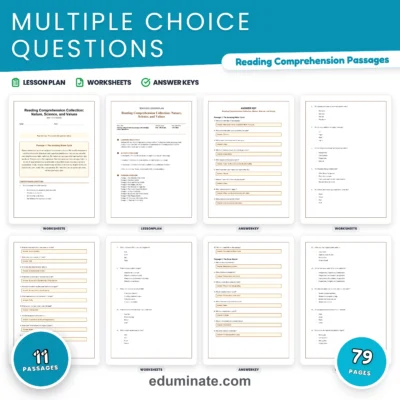
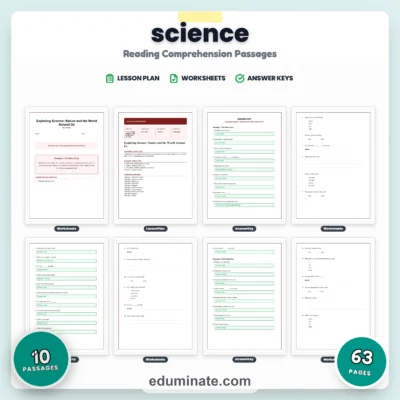
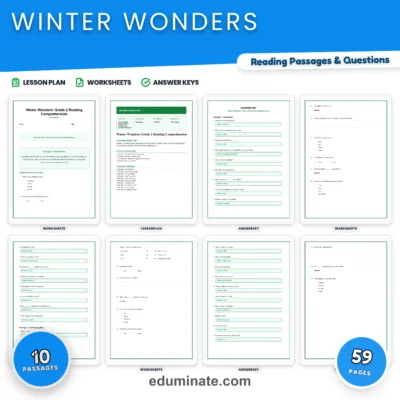
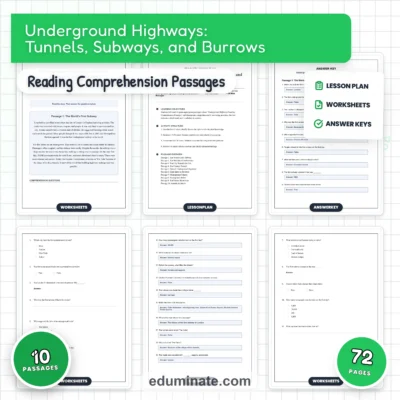
Each passage includes student worksheets with multiple-choice questions, short-answer prompts, and vocabulary matching. These cleaning the environment reading comprehension passages give learners repeated practice with informational reading skills while building personal responsibility for the planet.
Practical Classroom Ideas for Elementary and Middle Grades
Teachers use this grades 2-7 environmental cleanup reading comprehension packet for Earth Day units, environmental science modules, or weekly reading practice. You can read the first passage aloud to introduce neighborhood stewardship to younger elementary students. Older elementary and middle school students can work through the passages independently during science rotations or language arts blocks.
The pages print cleanly on standard classroom printers. Because each passage and worksheet pair is self-contained, these cleaning the environment reading comprehension passages work well for emergency sub tubs, morning work, or take-home packets. Students can complete the factual questions individually, then discuss the open-ended stewardship questions in small groups.
Discover more informational reading resources in our reading comprehension collection or explore additional ecology and conservation titles in the science category. You can also find related printable materials in the worksheets section.
Print the pages and put them straight to work in your classroom.
Frequently Asked Questions
What grade levels are these cleaning the environment reading comprehension passages suitable for?
This packet is written for students in grades 2 through 7. The 10 passages begin with simple neighborhood cleanups and progress to complex topics like microplastics, composting chemistry, and ocean conservation.
How many total pages and passages are included in this packet?
The resource contains 62 pages in total, including 10 informational reading passages, 40 pages of student worksheets, 21 pages of complete answer keys, and a 1 page teacher lesson plan.
What core environmental concepts do students study in these worksheets?
Students study waste sorting, recycling, upcycling, composting, clean water preservation, microplastics, forest ecology, the three Rs waste hierarchy, ocean marine debris, and community stewardship projects.
Are answer keys provided for every comprehension question?
Yes, 21 pages of answer keys are included. Every multiple-choice question, written response prompt, and vocabulary matching exercise has complete solutions to support fast and accurate teacher grading.