
Figurative Language Worksheets – Simile Metaphor Personification & Idioms
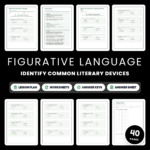
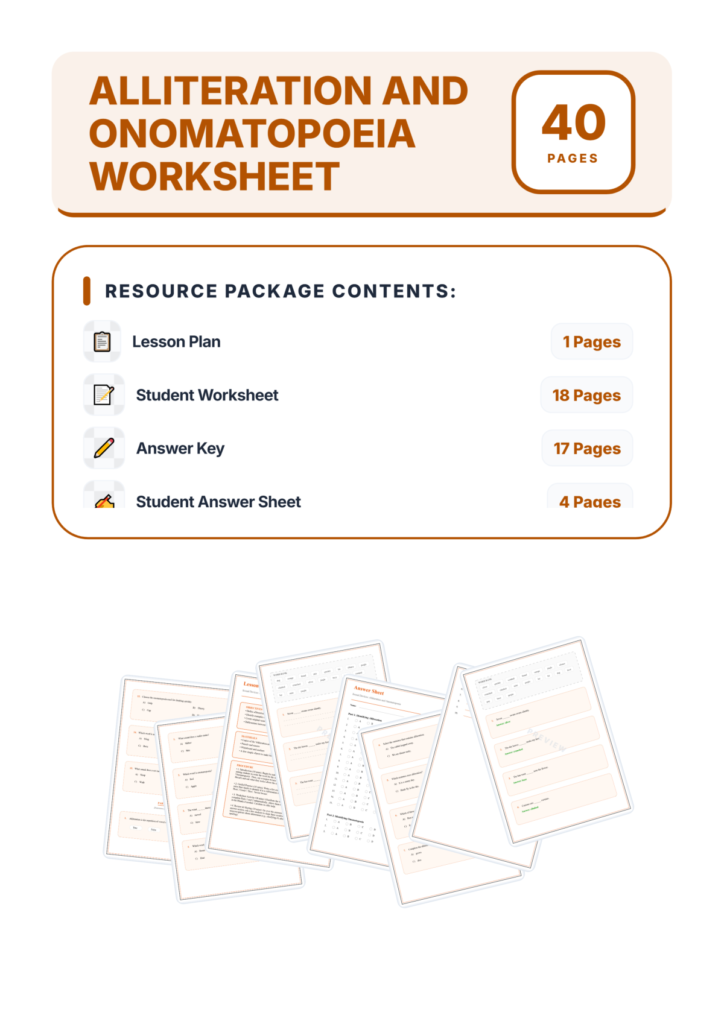
A figurative language worksheets packet of 40 pages for grades 6 to 8, with a lesson plan and answer key. Students work through 70 questions across 6 sections.
- PDF Mastering Figurative Language Answer Key 17 pages
- PDF Mastering Figurative Language Answer Sheet 4 pages
- PDF Mastering Figurative Language Lesson Plan 1 page
- PDF Mastering Figurative Language Worksheet 18 pages
- Total number of pages
- 40
- Page size
- A4
A figurative language worksheets packet of 40 pages for grades 6 to 8, built for middle school reading and writing classes. Students practice identifying and interpreting similes, metaphors, personification, hyperbole, idioms, alliteration, and onomatopoeia in context.
Middle school readers can often recite the definition of a simile or a metaphor, yet they sometimes get tripped up when a sentence uses the word like as a verb of preference (“I like pizza”) rather than a figurative comparison, or when an idiom carries a nonliteral meaning they haven’t unpacked before. Working through side-by-side examples across six structured sections helps students tell literal statements apart from nonliteral expressions and explain what each figure of speech actually communicates. By the final section, students move beyond simply naming devices and start using them in their own descriptive paragraphs.
What is inside this figurative language worksheets packet
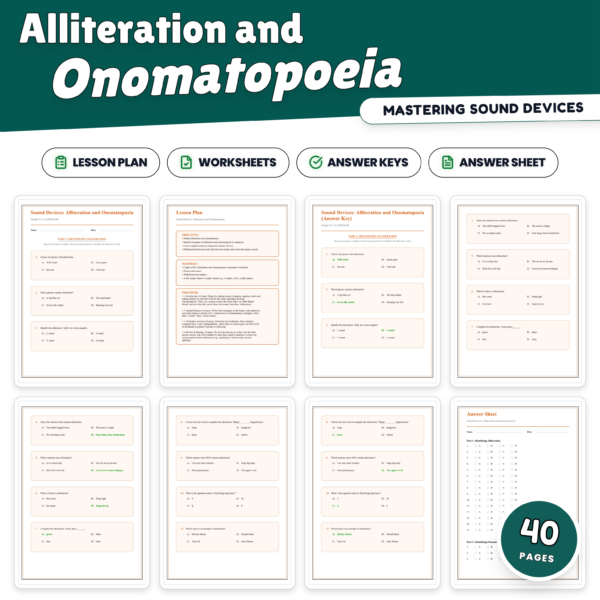
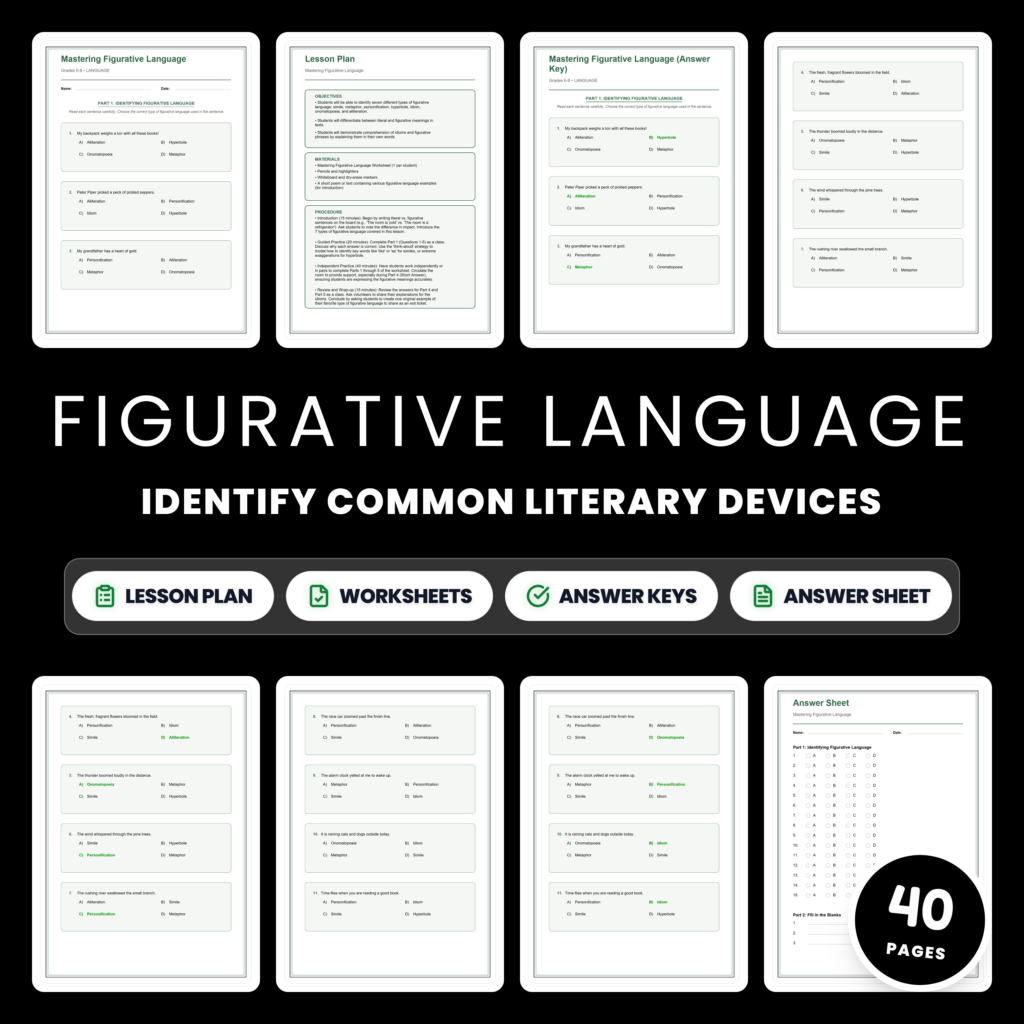
This printable set includes four classroom documents that add up to 40 pages:
- A teacher lesson plan of 1 page for a class period of 60 minutes, covering objectives, materials, a literal-versus-nonliteral board warm-up, direct instruction on major literary devices, guided practice, and closure.
- A student worksheet of 18 pages containing 70 numbered questions organized into 6 sections.
- A student answer sheet of 4 pages with bubble grids and numbered lines so you can grade quickly or keep printed worksheets reusable.
- An answer key of 17 pages showing every correct answer and a brief explanation for all 70 items.
How students work through the six sections
The student pages start with device classification and move step by step toward unpacking meaning and writing original figurative lines.
- Section 1 has 15 multiple-choice questions on classifying simile metaphor and personification alongside hyperbole and idioms. Students read sentences such as “The wind whispered secrets through the trees” or “Time is a thief” and select the matching literary device.
- Section 2 has 15 multiple-choice questions focused on interpreting hyperbole and idioms practice in context. Learners choose the accurate literal meaning of expressions like spill the beans, under the weather, or exaggerated statements.
- Section 3 has 10 True or False statements testing literal vs nonliteral language, including why not every sentence containing the word like or as is a simile.
- Section 4 has 10 fill-in-the-blank vocabulary items with a word bank of 13 words. Students complete definitions and examples using terms like personification, hyperbole, metaphor, and idiom while skipping three distractor words.
- Section 5 has 15 sentence-rewriting tasks. Learners convert similes into direct metaphors, add human actions to nonhuman objects, and turn plain literal descriptions into figurative sentences.
- Section 6 has 5 short writing prompts where students explain the difference between a simile and a metaphor, write a descriptive scene using at least three devices, and interpret figurative lines from a paragraph.
Ways to use these figurative language worksheets in class
The lesson plan walks you through a lesson of 60 minutes. You begin by comparing a plain literal sentence like “It rained hard” with figurative versions using hyperbole, personification, and simile on the whiteboard. After reviewing each device, you guide the class through the opening questions before students work independently.
You can also assign these figurative language worksheets during a poetry or novel study unit, use the separate answer sheet for a quiz on middle school literary devices, or place the explained answer key at a self-checking station.
Look over the preview pages before you buy to see the lesson plan, sample worksheet questions, and the explained answer key.
For more middle school language and poetry resources, visit our grammar worksheets and English language arts printables, or explore the full catalog of printable classroom worksheets.
Frequently Asked Questions
How many pages are in these figurative language worksheets?
The download has 40 pages in total. It includes a teacher lesson plan of 1 page, a student worksheet of 18 pages with 70 questions across 6 sections, a student answer sheet of 4 pages, and an answer key of 17 pages.
Which figures of speech are covered in this packet?
Students practice identifying, interpreting, and writing similes, metaphors, personification, hyperbole, common idioms, alliteration, and onomatopoeia across the 70 questions, while also comparing literal statements against nonliteral expressions.
What grade levels fit these figurative language worksheets?
The packet is designed for grades 6, 7, and 8. The sentences and writing prompts align with middle school reading and language standards for interpreting figures of speech in context.
Does the answer key explain why each device matches the sentence?
Yes. The answer key of 17 pages gives the correct answer for every item and prints a short explanation under each question explaining the comparison, exaggeration, or human trait used.
| Format | Digital PDF Document (.pdf) |
|---|---|
| Page size | A4 |
| Pages | 40 |
| Quality | Print-ready PDF |
| License | Single Classroom / Personal Homeschool License |