Quicksand Science Reading Comprehension Passages STEM Worksheets 3rd 8th Grade
Explore earth physics and fluids with 10 quicksand science reading comprehension passages. Includes 63 printable pages with worksheets and answer keys for grades 3 to 8.
Instant PDF download after payment, also saved in My Library.
Secure checkout by card or crypto.
Use it at home or in one classroom. Read the license
Details
- File format
- Pages
- 63
- Page size
- A4
- Files
- 3
- Grades
- 3rd–8th
- Answer key
- Included
In this download 3 files
- PDF Quicksand Science Reading Comprehension Passages Grades38 Answer Key 22 pages
- PDF Quicksand Science Reading Comprehension Passages Grades38 Lesson Plan 1 page
- PDF Quicksand Science Reading Comprehension Passages Grades38 Worksheet 40 pages
Sample pages
Study Earth Physics with Quicksand Science Reading Comprehension Passages
Help your elementary and middle school students separate movie myths from real fluid dynamics with this set of 10 informational texts. These reading comprehension materials explore the geology, physics, and fluid mechanics behind saturated sand mixtures. Students discover how underground water springs liquefy sediment and create shear thinning mixtures. Each unit connects physical science standards with focused literacy tasks across 63 printable pages.
Every passage includes companion student worksheets designed to strengthen informational reading skills. Learners practice answering detail recall questions, analyzing physical causes and effects, and matching science vocabulary words to clear definitions. The materials support students in grades 3 through 8 as they practice citing text evidence and building science vocabulary. These worksheets work well for direct reading instruction, science station rotations, or independent homework assignments.
What Topics Are Explored in This Earth Physics Unit?
This resource guides students through ten sequential units covering geological mixtures and fluid properties:
- What is Quicksand: Defining saturated sand beds, upward water pressure, and deceptive appearances.
- Don’t Panic: Examining psychological reactions and the importance of calm, slow physical motions.
- Where Can You Find It: River deltas, tidal beaches, marshlands, and underground spring outlets.
- Movies vs Reality: Debunking Hollywood fiction about victims sinking completely beneath the surface.
- The Mixture Water and Sand: Granular physics, clay particles, water saturation ratios, and friction loss.
- Smart Moves for Escape: Using surface area distribution, slow leg wiggles, and back floating positions.
- Solid Liquid or Both: Introducing colloids, phase behaviors, and variable structural states.
- Non Newtonian Fluids: How viscosity changes when mechanical stress or physical force is applied.
- Viscosity and Stress: Measuring fluid resistance, shear forces, and yield stress thresholds.
- Density and Equilibrium: Buoyancy principles showing why the human body floats in dense sand water slurry.
Educational Value of Quicksand Science Reading Comprehension Passages
Integrating these quicksand science reading comprehension passages into your curriculum provides meaningful non fiction practice while reinforcing essential earth and physical science principles. Students analyze why human body density prevents a person from sinking past waist depth. Teachers can use these units during earth materials studies, force and motion lessons, or science myth busting days.
The unit features non newtonian fluids worksheets that prompt learners to compare quicksand to common substances like cornstarch slurries. Students also read earth science informational text selections that describe how river tides continuously reshape sandbars. Teachers seeking quicksand physics reading activities will find clear, engaging passages that fit grade level reading benchmarks.
In addition, each geology and density reading practice sheet includes multiple assessment items. Students complete multiple choice selections, true or false statements, matching tasks, and short written responses. This predictable format builds student confidence and gives teachers immediate insight into reading comprehension levels.
Students also learn how civil engineers stabilize saturated ground before building bridges or highways. Examining real engineering solutions such as drainage pipes and chemical grouting demonstrates how scientific knowledge solves practical infrastructure problems. Understanding soil mechanics prepares young learners for advanced earth science coursework.
Practical Classroom Applications
These printables fit into diverse classroom routines. Use them for morning bell work, science station rotations, or emergency substitute lesson plans. The consistent format enables students to work independently without confusion.
Complete teacher answer keys accompany each passage, allowing for rapid grading or student self evaluation. Discover additional engaging resources in our shop to support your science and literacy instruction throughout the school year.
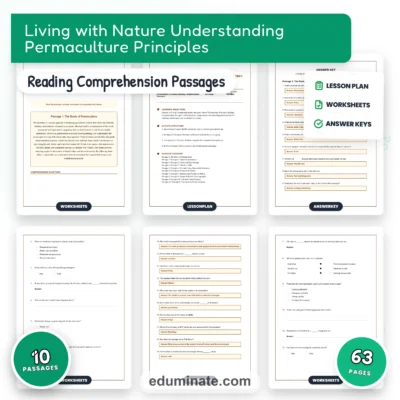
Across 63 printable pages, this packet contains 10 complete reading passages, 40 student worksheet pages, a teacher lesson plan, and 22 answer key pages. Add these quicksand science reading comprehension passages to your classroom collection to inspire young physicists and geologists.
Frequently Asked Questions
What grade levels can use these quicksand science reading comprehension passages?
These reading passages are written for students in grades 3 through 8. Introductory texts explain basic sand mixtures and safety rules, while later units address shear stress, non Newtonian fluids, and density math for older middle school students.
Are answer keys provided with the non newtonian fluids worksheets?
Yes, this packet includes 22 pages of complete answer keys. Every multiple choice question, true or false item, and vocabulary match features verified answers for quick and accurate grading.
How long does each quicksand science reading comprehension passages lesson take?
Each lesson takes approximately 15 to 20 minutes to read and complete with student worksheets. This makes them ideal for daily science warm ups, reading groups, or independent homework assignments.