Reptiles Worksheets: Reading Comprehension Passages with Answer Keys, Grades 2-6
Explore animal adaptations and cold-blooded wildlife with snakes and reptiles reading comprehension passages. Features 10 texts, tasks, and answer keys across 62 pages for grades 2 to 6.
Instant PDF download after payment, also saved in My Library.
Secure checkout by card or crypto.
Use it at home or in one classroom. Read the license
Details
- File format
- Pages
- 62
- Page size
- A4
- Files
- 3
- Grades
- 2nd–6th
In this download 3 files
- PDF Snakes and Reptiles Reading Comprehension Passages Grades26 1 page
- PDF Snakes and Reptiles Reading Comprehension Passages Grades26 2 21 pages
- PDF Snakes and Reptiles Reading Comprehension Passages Grades26 3 40 pages
Sample pages
Explore Animal Adaptations with Reptiles Worksheets
Reptiles represent some of the most adaptable animals on Earth. From desert basins to tropical rivers, these cold-blooded vertebrates rely on specialized scales, acute senses, and distinctive physical structures to thrive in diverse ecosystems. Our detailed set of reptiles worksheets introduces students to the diverse biology of squamates, crocodilians, and testudines. This practical packet contains ten informational articles supported by rigorous questions across 62 pages.
Every passage connects scientific concepts with essential reading skills. Students learn how ectothermic animals regulate internal temperature, how snakes track scents with forked tongues, and how camouflage hides predators from prey. In addition, these reptiles reading worksheets teach young readers to identify text structures, build domain-specific science vocabulary, and support inferences with direct evidence from the passage.
Educational Passages and Life Science Topics
The collection provides ten nonfiction passages tailored for learners in grades 2 through 6. Each reading selection presents distinct zoological concepts through clear, grade-appropriate language:
- What is a Reptile: Defines ectothermic vertebrates, dry scaly skin, lung respiration, and reproductive traits common to all reptiles.
- Slithering Snakes: Explains legless locomotion, belly scale friction, muscular contractions, and periodic skin shedding cycles.
- Turtles and Tortoises: Compares aquatic turtles and land-dwelling tortoises, focusing on shell structures and dietary habits.
- A Forked Tongue: Details chemical scent detection, the Jacobson’s organ, and how snakes track prey trails through air molecules.
- Masters of Camouflage: Examines physical coloration, countershading, and skin texture shifts that help chameleons and geckos blend into surroundings.
- Crocodiles vs Alligators: Contrasts snout shapes, tooth visibility, habitat salinity preferences, and geographical ranges of large crocodilians.
- Understanding Snake Venom: Explores specialized fangs, biological defense mechanisms, digestive enzymes, and medical research on antivenom.
- From Egg to Adult: Outlines reptile life cycles, leathery eggshells, maternal nesting habits, and juvenile growth patterns.
- Cold-Blooded Adaptation: Details basking behavior, metabolic rate shifts, brumation cycles, and microhabitat selection across seasons.
- Reptiles in the Ecosystem: Emphasizes ecological balance, pest population control, food webs, and ongoing conservation efforts.
Targeted Literacy Skills and Classroom Implementation
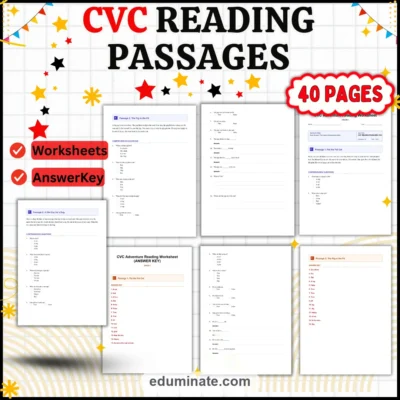
Teachers use these materials for whole-class reading instruction, guided small groups, and independent science centers. The included snakes and cold-blooded animals reading selections prompt students to compare contrasting species, evaluate cause-and-effect relationships, and write evidence-based summaries. Each passage pairs with multiple-choice questions, vocabulary exercises, and short constructed-response questions.
Our printable reptiles worksheets include complete answer keys and an organized lesson plan to support fast teacher grading. You can pair these articles with life science units on vertebrate classification or use them as focused weekly reading assessments. The structured format ensures that students gain deep factual knowledge while practicing critical reading standards.
You can integrate these reptile science reading activities into biology thematic units that link animal anatomy, habitats, and environmental science. Students explore the differences between reptiles and amphibians while examining real-world wildlife conservation. Engaging alligators and turtles reading comprehension tasks spark curiosity, group dialogue, and structured scientific writing across elementary and middle school grades.
Assigning these printable reptiles worksheets strengthens non-fiction fluency during morning work routines or homework assignments. Students build genuine confidence as they master technical animal terminology and discover surprising facts about reptilian survival strategies. Using our reptiles worksheets enriches your science curriculum with dependable, classroom-tested printables.
Each worksheet page provides generous writing space for students to annotate key facts, circle new terms, and record complete answers. These repeated reading routines cultivate strong critical thinking habits and independent inquiry throughout the school year. Learners develop enthusiasm for zoology as they examine how diverse reptiles survive in challenging climates around the world.
Frequently Asked Questions
What grade levels work best with these reptiles worksheets?
This resource targets students in grades 2 through 6. The introductory passages on reptile characteristics provide accessible reading for second and third graders, while later passages exploring venom chemistry, brumation, and ecological balance offer appropriate challenge for fifth and sixth graders.
Are answer keys included with these reptiles reading worksheets?
Yes, complete answer keys accompany every worksheet in this collection. The 21 answer key pages provide clear solutions for multiple-choice questions, vocabulary tasks, and written explanations, making grading fast and efficient for teachers and homeschooling parents.
Can teachers use these passages for cross-curricular science instruction?
Yes, these reptiles worksheets integrate life science concepts directly into reading instruction. Teachers can use them during literacy blocks, science rotations, or dedicated STEM lessons to support standards in both reading comprehension and zoology.
What files and total page count are included in this packet?
The download includes print-ready PDF files containing 62 pages in total. This includes 40 student worksheet pages covering ten passages, 21 answer key pages, and 1 teacher lesson plan page with pacing suggestions and objectives.