World of Soccer Reading Comprehension Passages and Sports Activities Pack
This 58 pages packet teaches world of soccer reading comprehension through sports literacy. Students explore ancient roots, referee signals, player roles, and team sportsmanship.
Instant PDF download after payment, also saved in My Library.
Secure checkout by card or crypto.
Use it at home or in one classroom. Read the license
Details
- File format
- Pages
- 58
- Page size
- A4
- Files
- 3
- Grades
- 3rd–6th
- Answer key
- Included
In this download 3 files
- PDF Soccer Reading Comprehension Passages Answer Key 17 pages
- PDF Soccer Reading Comprehension Passages Lesson Plan 1 page
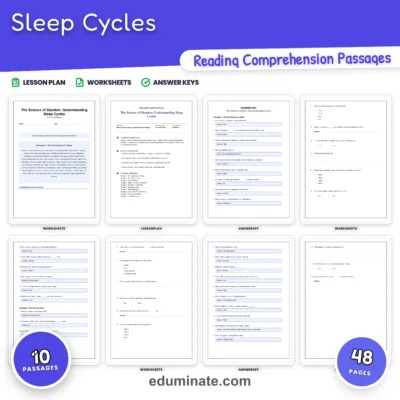
- PDF Soccer Reading Comprehension Passages Worksheet 40 pages
Sample pages
World of soccer reading comprehension for elementary and middle grades
This educational packet delivers focused world of soccer reading comprehension practice for third grade, fourth grade, fifth grade, and sixth grade classrooms. Through ten informative passages, young learners explore the heritage of global football, match regulations, defensive positioning, and core athletic values.
Every selection connects athletic excitement with rigorous literacy instruction, providing teachers with 58 pages of print-ready activities. The complete packet features 40 pages of student worksheets, a 17 pages answer key, and a 1 page teacher lesson plan. Learners investigate ancient ball sports, referee whistle signals, field dimensions, and cardiovascular fitness routines.
Informational topics covered in this sports unit
Developing consistent world of soccer reading comprehension requires high-interest non-fiction texts that motivate every student in the classroom. These ten passages present essential sports concepts with structured vocabulary and clear informational paragraphs.
- Passage 1 explores the ancient roots of soccer, describing feathered ball games in ancient China, Greek athletic games, and early European village matches.
- Passage 2 details the role of the goalkeeper, explaining quick reflexes, shot-stopping technique, goal box angles, and tactical distribution to defenders.
- Passage 3 covers essential soccer equipment, outlining molded cleats, sturdy shin guards, padded gloves, and regulation stitching on match balls.
- Passage 4 follows Ahmed during his big championship match, demonstrating teamwork, on-field focus, supportive communication, and game composure.
- Passage 5 examines the referee’s job, describing yellow card warnings, red card dismissals, offside rulings, and impartial rule enforcement.
- Passage 6 explains key positions on the field, contrasting attacking forwards, playmaking midfielders, center backs, and sweepers.
- Passage 7 highlights staying fit for the game, emphasizing cardiovascular stamina, hydration, leg flexibility, and injury prevention habits.
- Passage 8 celebrates the global game, exploring how international tournaments bring nations together across languages and continents.
- Passage 9 centers on sportsmanship and fair play, emphasizing respectful conduct toward opponents, match officials, and teammates.
- Passage 10 focuses on mastering soccer skills, showing how dedicated practice improves first-touch ball control, juggling balance, and passing accuracy.
Structured comprehension questions and assessments
To reinforce world of soccer reading comprehension passages and elementary sports reading comprehension, each passage includes a structured twenty-question assessment. These exercises evaluate essential informational reading standards, requiring students to cite facts and analyze athletic vocabulary accurately.
- Multiple choice items assess factual recall, passage sequence, and central idea identification across each reading selection.
- True and false prompts require learners to verify precise statements about historical events, tournament guidelines, and athletic safety.
- Fill in the blank sentences reinforce sports vocabulary including referee, sportsmanship, midfield, tournament, and conditioning.
- Matching activities connect athletic terms and soccer positions with their corresponding responsibilities on the pitch.
- Short response questions ask learners to summarize game tactics and express personal perspectives using direct textual evidence.
Classroom implementation and instructional ideas
Teachers seeking soccer history and rules worksheets can integrate world of soccer reading comprehension lessons into their regular literacy schedule. These soccer skills reading comprehension activities support high-interest reading centers, physical education cross-curricular units, or seasonal sports thematic weeks.
- Use individual passages during weekly reading intervention groups, small group instruction, or close reading rotations.
- Incorporate selections into informational reading units or physical education literacy assignments.
- Assign specific selections as independent morning work, homework assignments, or structured emergency substitute plans.
- Keep printed packets available for early finishers who love athletics and want to explore the world’s most popular sport.
The estimated lesson plan pacing spans approximately 150 minutes across multiple flexible class periods. Providing structured world of soccer reading comprehension helps third through sixth graders build confidence in reading informational texts while exploring athletic teamwork and sports heritage.
Discover more resources in our reading comprehension collection, find printable activities in our printable worksheets library, or visit the Eduminate shop for elementary and middle school curriculum materials.
Frequently Asked Questions
What grade levels is this world of soccer reading comprehension packet designed for?
This unit is designed for students in 3rd grade, 4th grade, 5th grade, and 6th grade. The reading passages feature high-interest athletic themes, clear informational paragraphs, and structured question sets that allow teachers to support multiple reading levels effectively.
Are complete answer keys included with the reading passages?
Yes, a complete 17 pages answer key section provides solutions for all twenty questions per passage. The clear layout allows teachers and substitutes to grade student work quickly or enable students to conduct independent self checking during literacy stations.
How does this packet support cross-curricular physical education lessons?
The passages explain official game rules, player safety equipment, referee responsibilities, and cardiovascular training principles. Physical education teachers and classroom instructors can easily link active sports practice on the field with informational reading in the classroom.