Synonyms and Antonyms: Meaning, Examples and Practice
Synonyms and antonyms are two groups of words that students use every day: synonyms share a meaning and antonyms have opposite meanings. This guide gives clear definitions, lists of example pairs, a tip for using a thesaurus, an anchor chart layout and activities for the classroom.
Synonyms and antonyms
Almost every reading and writing lesson touches on antonyms and synonyms in some way. A student who knows that big and large mean nearly the same thing can read a new sentence more smoothly. A student who knows that big and small are opposites can describe a size difference more clearly.
The two ideas go together because they both ask the same question: how are these words related in meaning? Teaching them as a pair lets students compare words side by side.
What are synonyms and antonyms
If a student asks what are synonyms and antonyms, here is a short answer to put on the board. The synonyms and antonyms meaning comes down to two lines:
- Synonyms are words that have the same or nearly the same meaning, such as begin and start.
- Antonyms are words that have opposite meanings, such as begin and end.
Notice that the word begin appears in both lines. One word can have a synonym and an antonym at the same time. That is a useful point to make early.
The word synonym comes from Greek roots meaning “same name,” and antonym comes from roots meaning “opposite name.” A student who sees syn and anti as word parts may remember the difference more easily. For a full synonyms and antonyms definition, you can add that both kinds of words must be the same part of speech to be swapped: you pair a noun with a noun, a verb with a verb and an adjective with an adjective.
Synonym examples
Here are twelve pairs of synonyms. Each pair is the same part of speech, and each pair can swap into a sentence about everyday things.
- big and large
- small and tiny
- happy and glad
- begin and start
- fast and quick
- smart and clever
- shout and yell
- close and shut
- rich and wealthy
- error and mistake
- choose and select
- silent and quiet
Synonyms are close, but they are rarely identical. Walk, stroll and march all describe moving on foot, yet each one paints a different picture. Tiny is smaller than small. Ask students to explain how two synonyms feel different, and they begin to choose words with care.
Antonym examples
These twelve pairs of antonyms are simple enough for early grades and still useful for older students.
- hot and cold
- up and down
- early and late
- full and empty
- hard and soft
- wide and narrow
- loud and quiet
- strong and weak
- true and false
- begin and end
- buy and sell
- awake and asleep
Not all antonyms work the same way. It helps to show three kinds, using these pairs:
- Scale pairs have steps between them. Between hot and cold you can find warm, cool and lukewarm.
- Either-or pairs have nothing in between. A light is on or off, and an answer is true or false.
- Relationship pairs only make sense together. You cannot buy unless someone sells.
Older students can sort the lists above into these three groups. Younger students can simply say the opposite out loud.
Synonyms and antonyms examples in sentences
Lists are a good start, but students need to see the words at work. These synonyms and antonyms examples each show a word, a synonym and an antonym in a sentence pair.
- happy: Mia was glad to see her friend at the door. (synonym: glad) Mia was sad to say goodbye. (antonym: sad)
- big: The truck carried a large box. (synonym: large) The truck carried a small box. (antonym: small)
- fast: The train was quick. (synonym: quick) The train was slow. (antonym: slow)
- difficult: The puzzle was hard to finish. (synonym: hard) The puzzle was easy to finish. (antonym: easy)
- clean: The kitchen was spotless. (synonym: spotless) The kitchen was dirty. (antonym: dirty)
- generous: Omar was giving with his time. (synonym: giving) Omar was selfish with his time. (antonym: selfish)
Ask students to read each pair aloud and say how the meaning shifts. This is the practice that moves a word from “I have seen it” to “I can use it.”
Words with more than one meaning
Some words need extra care because their synonyms and antonyms depend on how the word is used. Take the word light:
- In “a light backpack,” light means not heavy. The antonym is heavy.
- In “a light room,” light means bright. The antonym is dark.
The same goes for the word hard. A hard rock is the opposite of a soft rock, but a hard test is the opposite of an easy test. When students pick an antonym, remind them to check the meaning in the sentence first.
This idea links to another skill. Using the words around an unknown word to work out its meaning is the heart of the context clues post, and synonym and antonym clues are two of the types covered there.
Making antonyms with prefixes
Many antonyms are made by adding a prefix. Happy becomes unhappy, agree becomes disagree, and correct becomes incorrect. The prefixes un, dis, in and non often give a word the opposite meaning.
This works for many words, but not all of them. Students should be careful with words like uncle, dish and inch, because those letters at the start are not prefixes at all. A quick check is to remove the letters and see if a real word is left that fits the meaning.
Suffixes can also produce opposites. The endings ful and less often work as a pair: careful and careless, hopeful and hopeless, helpful and helpless. Students can build these pairs from a base word and see the opposite appear. Our list of suffixes gives meanings and examples for each ending.
Using a thesaurus with antonyms and synonyms
A thesaurus is a reference book, or a website, that groups words by meaning. A thesaurus with antonyms and synonyms lists words with similar meanings and often lists opposites too. It is a handy tool for students who keep using the same word in their writing.
One warning is worth giving every time. A thesaurus does not tell a student which synonym fits the sentence. Strong and powerful are close, yet “strong coffee” sounds right and “powerful coffee” does not. Teach students to read the new word in the full sentence and ask whether it sounds natural.
A simple routine for any thesaurus lookup:
- Write the word you want to replace.
- Pick two or three choices from the list.
- Read the sentence aloud with each choice.
- Choose the one that fits the meaning and the feel of the sentence.
- If you are not sure what a word means, check a dictionary before using it.
Synonyms and antonyms anchor chart
A synonyms and antonyms anchor chart keeps the two ideas visible all year. A simple layout uses two columns on one sheet:
- Left column, Synonyms: the definition in student words, a few example pairs and the sentence “Same or almost the same.”
- Right column, Antonyms: the definition, a few example pairs and the sentence “Opposite.”
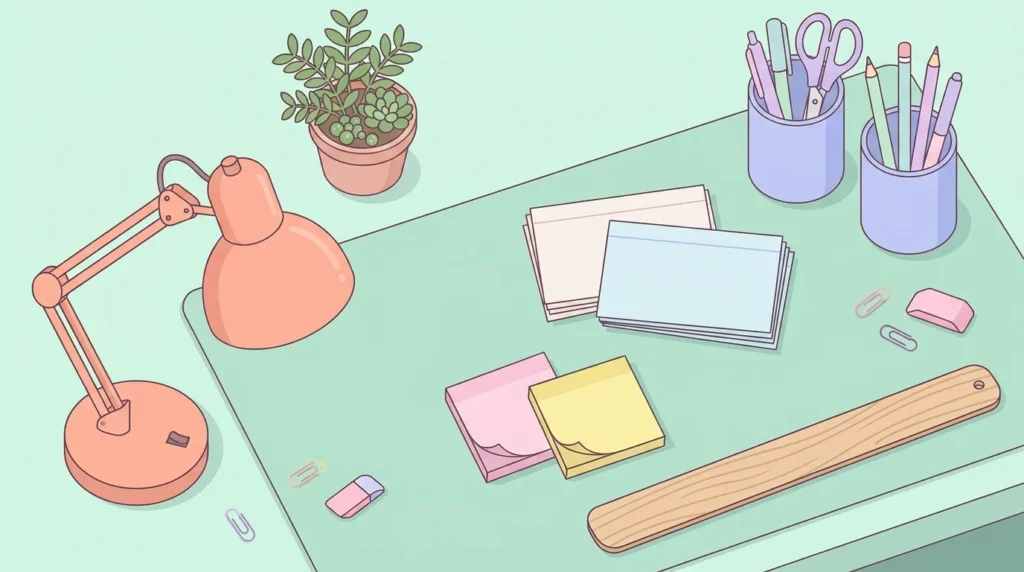
Leave a blank strip at the bottom with a heading such as “New pairs we found.” Students add sticky notes as they meet new pairs in their reading. The chart then grows with the class and never feels finished.
Activities for synonyms and antonyms words
Teachers who want synonyms and antonyms with examples that students create themselves can use the activities below. They use plain materials and work with a whole class, a small group or a station. Each one gives students practice with synonyms and antonyms words in a different way.
Sort the cards
Write one word on each of twenty index cards, ten synonym pairs or ten antonym pairs mixed together. Students match pairs, then lay the cards under a heading of Synonyms or Antonyms. Ask them to read each pair aloud and explain their choice.
Better word swap
Give students a short paragraph that overuses one word, such as nice, good or said. They highlight each use and replace it with a more exact synonym. Afterward, they read both versions aloud and talk about which one sounds better.
Opposite match
Place word cards face down in rows, as in a memory game. A player turns over two cards and keeps them if they are antonyms. For a harder round, a match must be synonyms. Add a rule that the player has to use both words in one sentence.
Post a pair
Choose a starter word. Each student writes a synonym and an antonym for it on a sticky note and posts both on the board. The class reads them and decides whether each one belongs. This is a good way to bring in words with more than one meaning.
How synonyms and antonyms differ from other word pairs
Students sometimes mix up synonyms and antonyms with other kinds of word pairs. Homophones, for example, sound alike but differ in meaning and spelling, such as pair and pear. Our post with homophones examples covers those in full. Compounds, such as sunlight, join two words into one. Having the three ideas on separate parts of the board stops them from blurring together.
Practice material
Word study packets give students more to work with once the lesson is done. The prefixes un, re, pre and dis packet is 29 pages for grades 2 to 4, with a lesson plan and answer key, and has 50 questions across 5 sections. The suffixes ful, less and ness packet is for grades 2 to 4 and has meaning questions, a word bank activity, true or false, spelling and short writing tasks, plus a full answer key.
The word study bundle collects four packets in one download: the prefixes un, re, pre and dis, the suffixes ful, less and ness, and two pairs students mix up all the time, its and it’s, and accept and except. It runs 183 pages for grades 2 to 7. For reading practice, the multiple choice reading comprehension packet has eleven texts across 79 pages for grades 2 to 5, and its questions let students practice vocabulary, recall and evidence. The fourth grade multiple choice passages come with ten topics across 84 pages and complete answer keys.
If you want every grammar and ELA packet in the shop, the complete grammar bundle has 32 packets and 1527 pages for grades 2 to 8.
Frequently asked questions
Does every word have a synonym and an antonym?
No. Many words have several synonyms but no true antonym. The word table has synonyms such as desk, but it has no real opposite. Some words have more than one antonym, depending on the meaning.
Can a word be a synonym and an antonym?
A word can be a synonym of one word and an antonym of another. Quiet is a synonym of silent and an antonym of loud. It is helpful to show students a word that appears in both lists.
What is the difference between synonyms and homophones?
Synonyms have similar meanings and usually sound different. Homophones sound the same and have different meanings. Their and there are homophones, and big and large are synonyms.
What grade learns synonyms and antonyms?
Students meet the idea in the early grades and keep building on it. The packets listed below cover grades 2 to 7, with the prefix and suffix packets aimed at grades 2 to 4, one reading packet at grades 2 to 5 and another at grade 4.