Emotions Coloring Pages for Feelings Lessons in Class
Emotions coloring pages are printable sheets that pair simple line art with a feeling, so a child can color while thinking about how they feel. They suit preschool to 2nd grade, and they work best when the page leads into a short chat rather than being handed out in silence.
Here are some page types and ideas to look for:
- Sheets with a happy scene and a short positive phrase to color in.
- Large, simple shapes with thick outlines for children who are still building pencil control.
- Pages with extra background details, such as stars and flowers, for children who want more to color.
- Counselor-style pages that connect feelings to empathy and kind choices.
- Good manners pages that show how to treat classmates.
The sections below explain how to choose a set, how to use the pages in a school day and which real packs on our shop match this topic.

In this article (11 sections)
- What emotions coloring pages are for
- Positive feelings versus all feelings
- Choosing a set by age
- Ways to use the pages in a school day
- Discussion prompts to keep on hand
- Fine motor tips for young colorers
- Emotions coloring pages on Eduminate
- Printing and prep
- A simple weekly routine
- Frequently asked questions
- Related resources
What emotions coloring pages are for
Young children often feel a big emotion long before they have the words for it. A coloring page gives them something to do with their hands while the feeling settles. It also gives you a way in: “Which color did you pick for this page, and why?” is easier to answer than “How do you feel?”
Teachers often file these sheets under social emotional learning, and parents may search for them as feelings coloring pages. Either way, the pages build fine motor skills and feelings vocabulary at the same time, which is why they fit so many parts of the day.
Coloring will not replace a feelings lesson. It supports one. Used well, the pages help with three things:
- Naming feelings, which builds vocabulary for talking about them.
- Settling into a calm routine at the start or end of the day.
- Fine motor practice, since gripping a crayon and staying inside an outline is real work for small hands.
Positive feelings versus all feelings
Many emotions coloring pages lean toward happy, hopeful images. That is useful for morning arrival and for building a warm classroom tone. Just be aware of what a set covers. A page that says “Stay Happy” does not give a child permission to talk about being sad or cross, so you may want to add that conversation yourself.
A simple way to widen the topic is to color a happy page first, then ask open questions:
- What makes you feel like this page?
- What could you do if you felt the opposite today?
- Who could you tell if you needed help?
Children answer these more freely when their hands are busy. Keep the questions short, and accept “I don’t know” without pushing.
Choosing a set by age
Preschool and pre-k
Look for thick outlines and big open areas. At this age the goal is holding a crayon and filling in a shape, and the feeling theme is secondary. One page, a few minutes and a short remark from you is plenty.
Kindergarten and 1st grade
Children can now color for longer and can say a sentence about the page. Ask them to finish “This page makes me feel …” or to tell a partner about a time they felt that way. Pages with small background details give faster workers something to keep doing.
2nd grade
Older children can write a line under their finished page. Two sentences about what the feeling looks like and one thing they could do about it make a good short task. Pages that tie feelings to empathy and manners fit this age well.
Ways to use the pages in a school day
Morning meeting
Hand out one page as children come in. Coloring gives them a soft start and lets you take attendance or greet families without a rush. After five or ten minutes, invite a few children to show their page and say one word about it.
Calm down corner
Keep a folder of pages and a small box of crayons in the corner. A child who needs a break can choose a page and color until ready to rejoin. Tell children in advance that this is a tool, not a punishment, and that they can take as long as they need within reason.
Counselor and small group sessions
School counselors can use a page as an opener. Color together for a few minutes, then move to a talk about feelings or friendship. Children who find eye contact hard often speak more easily side by side with a page between them.
Early finishers
Stock a bin of pages for children who finish early. Because the pages already carry a positive message, you do not need to explain the task again. Ask early finishers to choose the page that matches their mood and put it in a basket for display.
Sub plans
A substitute can run a coloring page with a short discussion without knowing your class well. Write three questions on the board and leave a stack of pages. Children get a calm period, and you get a record of who colored what.
Take-home activity
Send a page home and ask a family member to color one with the child. Ask the child to explain their page at dinner. This is a gentle way to bring feelings talk into the house.
Discussion prompts to keep on hand
Print or copy this list for your desk:
- Which color matches how you feel right now?
- When did you last feel like this page?
- What helps you feel calm?
- How can we tell when a friend feels sad?
- What is one kind thing we could say to someone?
Rotate through them rather than asking all at once. One question per sitting keeps it light.
Fine motor tips for young colorers
Feelings pages double as pencil control practice. A few small moves help:
- Offer chunky crayons or short pieces of crayon to encourage a proper grip.
- Tape the page to the table so it does not slide.
- Ask for slow, steady lines inside the outline before adding details.
- Let children choose any colors. A purple sun is fine, and it often starts the best conversation.
Emotions coloring pages on Eduminate
We read each pack page before listing it here, so the details below come straight from the product listings. All are PDF downloads, and the single packs are for preschool to 2nd grade.
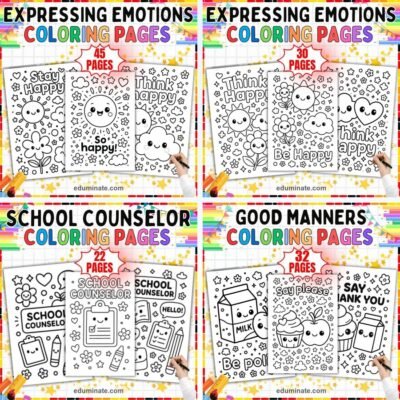
Emotions Coloring Pages is a 30 page set for $4.99. It shows smiling sunshine, happy flowers and cheerful clouds, with positive messages in bold black and white line art. The listing says the pages print on US Letter with Fit to page.
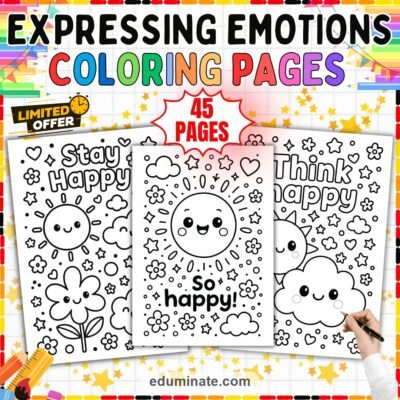
Expressing Emotions Coloring Pages has 45 pages for $5.99, with 41 coloring sheets. The artwork includes friendly faces, cheerful suns and smiling clouds, plus phrases such as Think Happy, Stay Happy and So Happy. It also prints on US Letter with Fit to page, according to the listing.
If you want more than one pack, the Emotions Coloring Sheets Bundle puts four packs in one download: the two above, a School Counselor pack of 22 pages on feelings and empathy, and a Good Manners pack of 32 pages. That makes 129 pages for $14.97, which is 25% off the separate prices of $19.96. The bundle is listed for preschool to 5th grade.
We did not find a free emotions pack on the shop, so these are paid sets. Open the “Look inside” sample pages on each product page before you buy. Downloaded files cannot be refunded, so check the samples match your class.
For more on the wider topic, our post on mental health coloring pages covers calm routines in more depth.
Printing and prep
These files need no preparation beyond printing. A few habits make a stack of pages last:
- Print a class set of each page you plan to use and file them by feeling or theme.
- Print two to a sheet if you want a shorter task for restless children.
- Keep a clean master copy so you can reprint when a page runs out.
- For sets on A4 pages, use “Fit to page” in the print dialog so nothing is cut off at the edge.
Use the pack in one classroom or at home, as the license on the product page explains.
A simple weekly routine
If you want a plan that does not take much time, try this:
- Monday: a happy page and one question at morning meeting.
- Tuesday: a page about kindness or manners, with a partner chat.
- Wednesday: free choice of any page, with a sentence written underneath.
- Thursday: a counselor or empathy page in a small group.
- Friday: children pick a favorite from the week and share it with the class.
Short, regular sessions build a habit. Children begin to expect the feelings talk and join in without being asked.
Frequently asked questions
Are emotions coloring pages good for preschool?
Yes, when the artwork is simple. Pick sets with thick outlines and large shapes, keep sessions short and let the picture lead to one easy question.
Can coloring really help children manage big feelings?
It gives them a quiet task while a feeling passes, and it gives you a chance to talk with them. It does not replace support from a counselor or family when a child needs more help.
How many pages do I need?
That depends on how often you plan to use them. A single pack of 30 to 45 pages covers a class for many weeks if you use one page per session. The bundle suits a school counselor who sees many groups.
Should every page show a happy feeling?
Not necessarily. Positive pages are good for building a warm tone, but add conversation about harder feelings yourself so children know all feelings are welcome to talk about.