Mental Health Coloring Pages for Class and Home Use
Mental health coloring pages give students a quiet, low-pressure way to put a name to a feeling and then do something calm with their hands. This guide covers how to choose them, how to introduce them, and how to use them in a classroom, a counselor’s office or at home.
What mental health coloring pages are
These are printable pages built around feelings, kindness and positive messages. Instead of a random picture, the page gives the student something to think about while they color. A page might show a feeling word, a short kind message or a prompt about how to treat others.
They are a simple tool, and it helps to be clear about what they are. They are not therapy, and they do not replace a counselor or a doctor. They are a gentle starting point that lets a student sit quietly, focus on one task and open a short conversation with an adult.
Here is what a good set tends to offer:
- Pages that are easy to start, so a student does not need to explain anything first.
- Room for choices, such as which color to use for a feeling.
- Messages that are kind and plain, so an adult can build on them.
- Enough pages that you are not printing the same sheet every week.
Why coloring fits social emotional learning
Social emotional learning is about recognizing feelings, handling them and getting along with others. Talking about feelings straight on can be hard, especially for younger students. A page and a box of crayons take some of the pressure off, because the student has something to do while the talking happens.
Coloring also slows things down. A student who has just come in from a loud recess can settle into shading a shape. An adult sitting nearby can then ask one or two easy questions, such as “Which color did you pick for this feeling?” The answer often tells you more than a direct question would.
Coloring pages work best as one part of a wider plan for social emotional learning, not the whole plan. Pair them with talking, reading aloud and clear class routines.
Feelings coloring pages for naming emotions
Many students know they feel “bad” or “good” but do not have more precise words yet. Feelings coloring pages give those words a place to live.
Two packs in the shop are built around feelings:
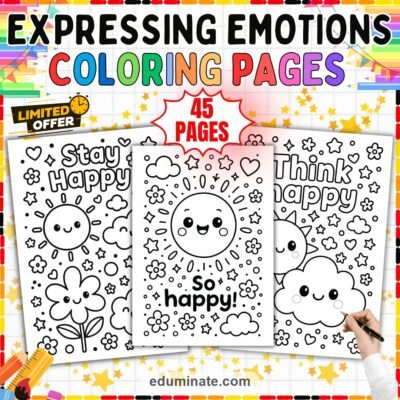
- The Expressing Emotions Coloring Pages set has 45 pages with calming sunshine and social emotional learning prompts, made for preschool and elementary students.
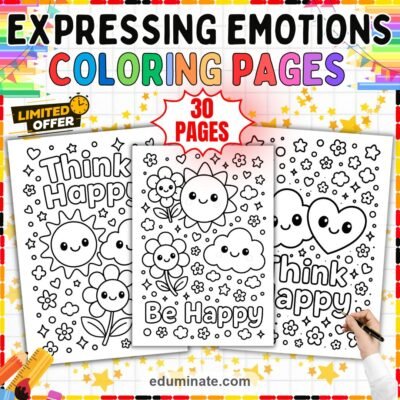
- The Emotions Coloring Pages set has 30 pages of happy feelings and positive messages for early childhood learners.
Here are three ways to use feelings pages with a group.
A color for each feeling
Before coloring, agree on a color for a few feelings as a class, for example blue for calm and orange for excited. Students then color the page using the chart. Later, a student can show you a finished page and say, “I used orange, so I felt excited.” This gives quiet students a way to share without speaking in front of everyone.
Feeling words list
Write a short list of feeling words on the board, such as calm, proud, nervous, tired and curious. Ask each student to choose one word from the list and color the page to match it. Keep the list short at first and add words as students get comfortable.
Sentence starters
When a page is done, offer a sentence starter: “Today I feel …” or “Something that helps me is …” Older students can write the sentence on the back. Younger students can say it aloud to a partner.
Using coloring pages to build kindness and good manners
Feelings are one side of the topic. The other side is how we treat each other. Manners and empathy pages bring that part in.
- The Good Manners Coloring Pages set has 32 pages on polite classroom behavior and respectful habits, suited to social emotional learning, morning meetings and character education.
- The School Counselor Coloring Pages pack has 22 pages on feelings and empathy, made for counseling offices, empathy lessons and calming spaces.
A manners page works well with a short talk. Read the message, ask the group what it looks like in the room, and give two or three examples of your own: waiting for a turn, saying thank you after help, or putting supplies back where they belong. The coloring comes after the talk, so the message is fresh.
The counselor pack suits a smaller setting. A counselor can set a page and crayons on the table at the start of a session, so a student has something to do while settling in. If you are not a counselor, the same idea works at a quiet reading table.
Growth mindset coloring pages for building confidence
A growth mindset is the idea that effort and practice lead to progress. Positive messages about trying again fit naturally with coloring, because a page is a small project with a clear finish.
The Growth Mindset Coloring Pages set has 41 printable pages with positive affirmations, made for back to school week and social emotional learning.
A few ways to use a growth mindset page:
- Read the message together, then ask what it could look like in a hard task such as a long math problem or a new book.
- Let students color slowly, and point out the effort they are putting in rather than only the result.
- Display the finished pages on a wall so the messages stay in view during the week.
Keep the tone plain. A student does not need to be told a page will change how they think. The page is a prompt, and your follow-up conversation does the real work.
Setting up a calm down corner with coloring pages
A quiet space gives a student somewhere to go when the room feels like too much. Coloring pages are an easy item to put there. Our guide to calm down corner ideas covers how to set up the space itself.
For the coloring part, a small basket is enough:
- A short stack of pages from your feelings and manners sets.
- A cup of crayons or colored pencils, sharpened and ready.
- A clipboard, so a student can color on a lap or floor.
- A simple card with two steps, such as “Pick a page. Color until you are ready.”
Introduce the corner when everyone is calm, not in the middle of a hard moment. Show the class how the basket works, and let a few students practice. After that, the corner can feel familiar when someone needs it.
Using coloring pages at home
Parents can use the same pages at the kitchen table. A page is a good starting point after school, when a child may not want to answer “How was your day?” Setting out crayons and a feelings page lets the talk start sideways.
Some simple habits that help:
- Color alongside your child, working on your own page. Sitting side by side keeps the mood relaxed.
- Ask open questions about the page, not about the day. “Which color did you start with?” is easy to answer.
- Keep finished pages in a folder. Looking back later shows how a child has grown.
- Do not grade the coloring. Staying inside the lines does not matter here.
If a child seems to be struggling with big feelings often, a coloring page is not enough on its own. Talk with the school counselor or a doctor.
Choosing the right set of coloring pages for kids
Coloring pages for kids come in many styles, so it helps to check a few things before you print.
Age fit
Younger students do best with large, simple shapes and short messages. Older students can handle finer detail and longer prompts.
Message quality
Read the messages before you print. They should be kind, plain and easy for you to talk about. If a message needs a long explanation, it is probably not the right page for your group.
Size of the set
If you plan to use pages every week, a larger set saves time. If you want a single topic, one pack is enough.
The Emotions Coloring Sheets Bundle puts four coloring packs in one download, covering feelings, good manners and empathy, in 129 pages, at 25% off the separate prices. It is a practical choice when you want all three topics in one place.
Coloring tools and routines
A few simple choices make the activity smoother.
- Crayons: forgiving and easy to hold, good for younger students.
- Colored pencils: allow finer detail and suit older students.
- Markers: bright and fast, but they can bleed through thin paper, so print on heavier paper if you can.
Decide on a routine in advance. For a morning meeting, one page can be a quiet arrival task: students sit, pick a page and color while you take attendance. For a counselor session, the page can be the first few minutes before talking. In both cases, tell students that there is no right way to finish.
A simple routine for introducing a page
A short, steady routine helps the activity feel safe. Here is one way to run it.
- Hand out the page and the coloring tools, and say that there is no right way to finish.
- Read the word or message on the page aloud together.
- Give students a few quiet minutes to color, with no talking required.
- Invite anyone who wants to share to show a color choice or read the message again.
- Collect the pages, or let students keep them in a folder.
The routine matters more than the page. When students know what to expect, they can relax into the task. Use the same steps each time for a week or two, and then change one thing at a time.
Pairing coloring with reading and writing
A coloring page can also lead into other work. Here are a few simple pairings.
- Read aloud: choose a short story about a feeling, then let students color a matching page afterward.
- Journal entry: after coloring, students write one sentence on the back of the page about the feeling they picked.
- Vocabulary: add one new feeling word each week, such as patient, grateful or disappointed, and use it on the board and in conversation.
- Partner talk: two students share their color choices and explain one of them in a sentence.
Each of these keeps the focus on the student’s own words. You are not asking anyone to explain a personal problem. You are giving them practice with words they can use later.
What to do with finished pages
Finished pages deserve a plan, or they end up in the recycling bin by Friday.
- Make a feelings wall with pages students agree to share.
- Send a page home with a note that invites a family conversation.
- Collect pages in a folder for the counselor or the student to look back on.
- Let the student choose: keep it private, share it with you or put it on display.
Always give students a say. A page that was meant to feel safe should not turn into a display that makes someone uncomfortable.
Frequently asked questions
Are mental health coloring pages a replacement for counseling?
No. They are a gentle activity that can support a conversation. A student who needs more help should see the school counselor or another qualified adult.
Which grades can use these pages?
The packs in this guide are described for preschool, early childhood and elementary learners. Pick pages with simple shapes for younger students and use more of the talking and writing prompts with older ones.
Do students have to share what they feel?
No. Sharing should always be a choice. Some students will color quietly, and that is fine. Offer an easy way to share, such as pointing to a color on the chart, and leave the rest to them.
How many pages should I print at once?
Print a small stack and refill it as needed. A short stack in a basket looks inviting, while a large pile can feel like a chore.