Kawaii Coloring Pages: Cute Printable Ideas for Class
Kawaii coloring pages give children soft, round, cheerful shapes to fill with color, and they work well for calm art time at school or at home. This guide covers what makes the style different, how to choose a set, how to plan a pastel palette and where food and school themes fit.
What makes kawaii coloring pages different
Kawaii is a Japanese word that means cute. In coloring pages, the style shows up as rounded shapes, simple lines and small friendly details around the main picture. A slice of pizza, an apple or a pencil case is drawn with soft corners instead of sharp edges.
That look has a few practical benefits for a coloring session:
- Large, simple shapes are easy to stay inside, so a beginner can finish a page without frustration.
- Small extras, such as stars, leaves and banners, give a more confident child something to add.
- Everyday subjects, such as food and school supplies, are familiar, so children talk about what they are coloring.
Because the shapes are simple, the same page works for a wide range of ages. A younger child may color one color per shape. An older child may blend two colors and add a pattern.
How to choose cute coloring pages
Cute coloring pages are not all alike. A few checks before you print will save time.
Line weight
Bold outlines are easier to stay inside and show up well even when a child presses lightly. Thin lines look delicate but ask for more control.
Amount of white space
Pages with big empty areas invite patterns and backgrounds. Pages packed with small shapes take longer and suit patient colorers.
Theme
A set built around one subject, such as pizza or ice cream, keeps a group focused. A mixed set lets each child pick a favorite.
Size of the set
If you plan to use pages every week, a larger set saves you from hunting for new sheets. A single bundle is also easier to store than six separate files.
The Candy Coloring Pages Bundle puts six coloring packs in one download, covering candy, lollipops and sweet treats, in 352 pages. It is a handy starting point when you want a big supply of cute sheets in one place.
Kawaii food coloring pages
Food is the most popular subject for this style, and it is easy to see why. Children know what a slice of pizza or a scoop of ice cream looks like, so they already have ideas about color. These are some sets to look at.
- The Cute Pizza Coloring Pages pack has 40 printable pages with kawaii faces, friendly crusts and happy snack companions.
- The Cute Ice Cream Coloring Pages pack has 40 printable pages with frozen treats, kawaii dessert characters and sweet summer fun.
- The Cute Apple Coloring Pages set has 32 apple pages with word banners, flowers and stars, plus a name page and coloring tips, 36 pages in all.
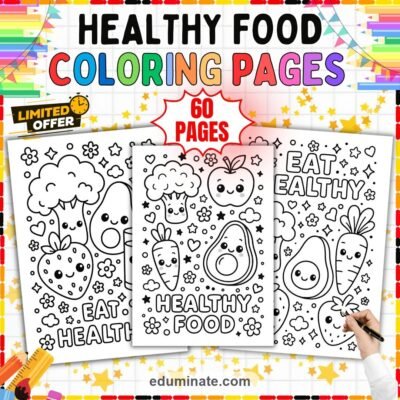
- The Fruits and Vegetables Coloring Pages set has 60 printable sheets of kawaii broccoli, apple, carrot, avocado and more, plus an 8 page preview file.
Ideas for kawaii food coloring pages
Food pages open up some easy conversations and small projects.
- Real colors or invented colors. Ask a child to color the carrot the way a real carrot looks, then color a second page in any colors they like. Compare the two and talk about the choices.
- Menu board. Cut out finished pages and tape them on a sheet of construction paper as a pretend menu for a class cafe.
- Sorting. Lay out finished pages from a mixed set and sort them into fruits, vegetables and treats.
- Color hunt. Call out a color, such as green, and ask who colored something green on their page.
Back to school coloring pages in kawaii style
School supplies make a friendly subject at the start of a term, when children are getting used to the room and the routines. Pencils, notebooks, backpacks and erasers are all things they will handle every day.
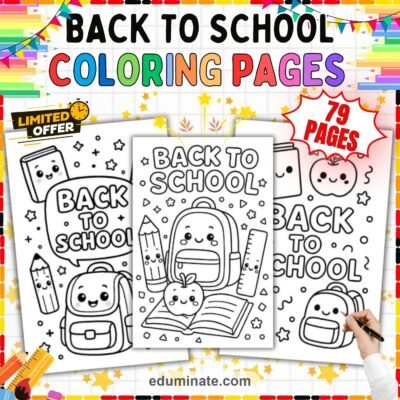
The Kawaii School Supplies Coloring Pages book has 79 printable pages with cute kawaii style school supplies, bubble letter Back to School titles and a name and class cover page. Here are a few ways to use back to school coloring pages with a class.
- Cover page first. Let each child fill in the name and class page and color it. Staple the finished pages into a personal coloring book.
- Supply labels. Color a picture of a pencil or a glue stick and tape it on the shelf or bin where that item belongs.
- Morning bin. Keep a few pages in a folder for children who arrive early and need a quiet start.
- Family night. Print a few pages for parents and children to color together while they wait.
Planning pastel colors
Pastel colors are a good match for kawaii pages, because soft shades fit rounded shapes. Pastel simply means a light, gentle version of a color, such as pale pink, mint green, light blue and soft yellow.
A few ways to get that look with school supplies:
- Press lightly. A light touch with colored pencils or crayons gives a paler color than pressing hard.
- Layer two colors. Blue over yellow makes green, and a light layer of red over yellow makes a soft orange.
- Add white space. Leave a small patch on each shape uncolored, like a shine on an apple.
- Pick a palette. Choose four colors before starting and use only those on the whole page.
A simple palette challenge
Write four color names on the board, for example pink, mint, light blue and yellow. Ask children to color a whole page using only those four. When they finish, place the pages side by side and notice how each one still looks different.
Tools for coloring sheets
The same coloring sheets look different with different tools, so it helps to offer a choice.
- Crayons are forgiving and easy to hold. They suit younger children.
- Colored pencils allow fine lines and gentle shading. A sharp tip helps with small details such as stars.
- Markers give bold, even color. Put a spare sheet of paper underneath, since marker can show through.
Print on regular copy paper for everyday use. Heavier paper handles markers and layered color better.
Fine motor skills and calm time
Coloring inside shapes uses the same small hand movements as writing, so kawaii pages can double as fine motor skills practice. A child who traces the inside edge of a round apple with a pencil is controlling the pencil in a careful way.
They also fit calm moments in the day. Keep a folder of pages near a quiet corner for children who need a break, or hand them out to early finishers. For more free ideas, see our guide to free printable coloring pages.
Reading and writing with kawaii coloring sheets
Coloring pages can lead straight into short language tasks. Once a child has finished a page, the picture becomes a prompt.
- Label it. Ask children to write the name of the food or object on a small card and tape it beside the picture.
- Describing words. Choose one word for the page, such as round, sweet, crunchy or soft. Younger children can say the word aloud. Older children can write a full sentence.
- Short story. Ask a child to write two sentences about the food on their page: what it tastes like and when they like to eat it.
- Word banners. Some sets include word banners on the page. Children can color the banner and read the word to a partner.
Sentence starters help a child who is not sure where to begin. Write one on the board, such as “My pizza has …” or “I colored my apple …”, and let children finish it.
Math and sorting with cute coloring pages
Finished pages make handy counting material, and sorting needs no extra supplies.
- Sort by subject. Spread out pages from a mixed set and sort them into groups, such as fruit, vegetables and sweets.
- Bar graph. Draw three columns on the board. Each child tapes their page in the column for their favorite food. Count each column and compare.
- Add and subtract. On Monday, 5 children color an apple page. On Tuesday, 3 more do. How many in all? Eight. If 2 of those pages go home, how many remain on the wall? Six.
- Patterns. Color the small stars around a picture in a repeating pattern, such as pink, blue, pink, blue.
Small projects from finished pages
A finished page does not have to go straight in a folder. A few easy projects give the work a second use.
- Bookmarks. Color a small picture, cut it out and glue it on a strip of card.
- Cubby labels. Cut out a colored supply picture and tape it on a cubby or tray.
- Gallery wall. Mount pages in rows with a strip of colored paper behind each one.
- Greeting cards. Fold a sheet of paper in half and glue a cut-out picture on the front. Children can write a thank-you note inside.
- Coloring booklet. Stack a few finished pages, add a cover page and staple the left edge.
Setting up a coloring station
A small station makes coloring easy to offer all week without extra work.
- Print a few different pages and store them in a folder or a tray.
- Put crayons, colored pencils and markers in separate cups.
- Add a sharpener and a small container for tips and scraps.
- Place a basket for finished work and another for pages still in progress.
- Show a sample page so children see what is possible.
Let children choose their own page. A child who picks a subject they like will stay with it longer and take more care.
Tips for younger and older children
Younger children
Offer pages with big shapes and thick lines. Use chunky crayons. Remind them that coloring outside the line is fine, and praise the colors they chose instead of how neat the page is.
Older children
Offer pages with smaller details, and invite blending, patterns and backgrounds. Ask them to plan a palette first and explain their choices. They can also write a label or a short caption beneath the picture.
Mixed groups
Give everyone the same page and let each child decide how much detail to add. One page can then work for the whole table.
Frequently asked questions
What age are kawaii coloring pages for?
Simple pages with bold outlines suit preschool and kindergarten. Pages with more small details suit older children who like a challenge. Look at the line weight and the number of small shapes before you print.
Can children share one page between two?
Yes. Two children can color one page together, each taking a half. It works well for partner work and for a child who likes company.
Do the pages need special paper?
No. Regular copy paper works for crayons and pencils. If you plan to use markers, a heavier paper is a better choice.
How can I use kawaii pages for early finishers?
Keep a folder of pages in a set place. When a child finishes other work, they take one, color it and add their name on the back.