Present Simple vs Present Continuous: Rules and Examples
The present simple is for habits, facts and schedules. The present continuous is for actions happening now. This guide to present simple vs present continuous shows how to choose between them, with an at-a-glance table, the time words that give each one away, the spelling rules for the -ing form, a list of verbs that usually do not take the continuous, common mistakes, and classroom exercises with a short self-check test.
Present simple vs present continuous at a glance
| Present simple | Present continuous | |
|---|---|---|
| Use | Habits, routines, facts, schedules | Actions happening now, temporary situations, actions around now |
| Form | Base verb (add -s or -es for he, she, it) | am, is or are + verb-ing |
| Time words | always, usually, often, sometimes, never, every day, on Mondays | now, right now, at the moment, today, this week |
| Example | She walks to school every day. | She is walking to school right now. |
Some books call the first tense the simple present. The simple present vs present continuous choice works the same way: ask whether the sentence describes something that happens regularly or something that is in progress.
When to use the present simple
Use the present simple for:
- Habits and routines: I brush my teeth every morning.
- Facts: The sun rises in the east.
- Schedules: The bus leaves at eight.
The verb stays in its base form for I, you, we and they. For he, she, it and any single noun, add -s or -es: walks, watches, goes, studies. Our guide to subject-verb agreement rules explains this ending in detail.
Make negatives with do not or does not and the base verb: She does not like tea. Make questions with do or does: Does she like tea? After does, the main verb has no -s.
For present simple practice, the Simple Present Tense Worksheets have multiple choice, fill in the blank, negative sentences and questions, with a full answer key that explains each answer and a lesson plan (listed for all grades).
When to use the present continuous
Use the present continuous for:
- Actions happening now: The children are reading right now.
- Temporary situations: I am staying with my aunt this week.
- Actions around now: She is learning to swim this month.
The form is am, is or are plus the verb with -ing. Use am with I, is with he, she, it and single nouns, and are with you, we, they and plural nouns. Negatives use not: He is not sleeping. Questions flip the helper verb: Are they playing?
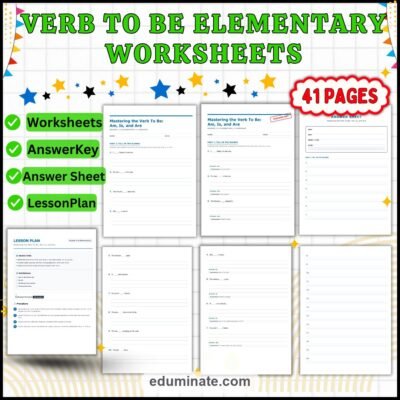
Younger learners need am, is and are before they can build this form. The Verb To Be Worksheets are a 90-question set for grades 1 to 3 on am, is and are. For the continuous itself, the Present Continuous Tense Practice set has multiple choice, fill in the blank and sentence transformation, with a teacher answer key and lesson plan (grades 3 to 6).
Spelling the -ing form
These rules cover most verbs, but exceptions exist.
| Rule | Examples |
|---|---|
| Drop the silent e | make, making; write, writing; come, coming |
| Double the final consonant in short words with one vowel and one final consonant | run, running; sit, sitting; swim, swimming |
| Do not double w, x or y | snow, snowing; fix, fixing; play, playing |
| Keep the y after a consonant | carry, carrying; study, studying |
| Change ie to y | lie, lying; tie, tying |
Longer verbs double the last consonant only when the stress falls on the last syllable: begin, beginning but visit, visiting.
Verbs that usually do not take the continuous
Stative verbs describe a state, not an action you can watch. Most of them use the present simple even when the situation is true right now.
| Verb group | Right | Wrong |
|---|---|---|
| Knowing and believing: know, understand, believe | I know the answer. | I am knowing the answer. |
| Liking and wanting: like, love, want, need | She wants a drink. | She is wanting a drink. |
| Having and belonging: have (possession), own, belong | He has a red bike. | He is having a red bike. |
Some of these verbs have a second meaning that does take the continuous. Have in the sense of eat is fine: We are having lunch.
Common mistakes
These are the mix-ups that come up most in present continuous vs present simple work, along with other simple slips.
| Wrong | Right | Why |
|---|---|---|
| I am knowing the answer. | I know the answer. | Know is a stative verb. |
| She plays now. | She is playing now. | Now points to the present continuous. |
| He go to school every day. | He goes to school every day. | He, she and it need -s or -es in the present simple. |
| They are play soccer. | They are playing soccer. | The continuous needs the -ing form. |
| Does she likes tea? | Does she like tea? | After does, use the base verb. |
| I am eating breakfast every morning. | I eat breakfast every morning. | A daily routine uses the present simple. |
Present simple vs present continuous exercises and activities
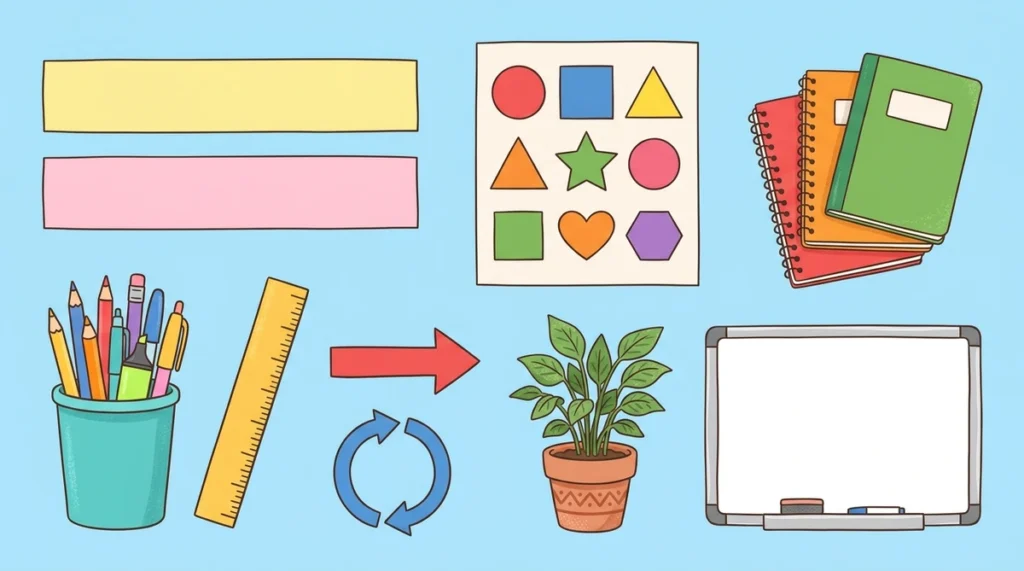
These present simple vs present continuous activities need only paper, a pencil and a few picture cards.
Sort the sentence strips by tense
Write pairs of sentences on strips, such as Dan plays soccer on Fridays and Dan is playing soccer now. Students sort them into present simple and present continuous piles and underline the clue words.
Describe what is happening in a picture
Hold up a picture of a busy scene or look at a classroom object together and ask: “What is happening?” Students answer in the present continuous with no miming needed: The bus is stopping. A boy is waving.
Daily routine vs right now
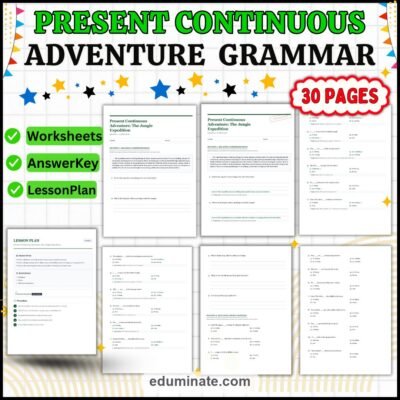
Give students two columns. In the first, they write what they do every day. In the second, they write what is happening right now. Seeing both columns side by side makes the contrast clear. For students who enjoy story-based practice, the Present Continuous Tense Worksheets are a grade 5 set built around a jungle expedition story, with reading comprehension, multiple choice, spelling and sentence transformation.
A six-sentence present simple vs present continuous test
Choose the correct form of the verb in brackets. The answers are below.
- Tom ___ (walk) to school every day.
- Look! The baby ___ (sleep).
- We ___ (not like) rainy days.
- At the moment, I ___ (read) a story.
- The sun ___ (rise) in the east.
- ___ you ___ (know) her name?
Answers
- walks
- is sleeping
- do not like
- am reading
- rises
- Do you know
Practice material
The three present tense sets above (Simple Present Tense Worksheets, Present Continuous Tense Practice and Present Continuous Tense Worksheets) cover the two tenses separately. Once students are steady with both, the Verb Tenses and Verb Forms Worksheets Bundle is a next step. It has five verb packets (past continuous and past simple, irregular verbs, subject verb agreement, modal verbs, gerunds and infinitives) and is listed for grades 4 to 8. It does not contain the two present tense packets.
The past tense is the natural next tense to learn, and many common verbs are irregular. Our irregular verbs list groups them by pattern. For questions in both tenses, see our post on the types of sentences.
Frequently asked questions
Can “always” be used with the present continuous?
Yes, to describe a repeated action that is annoying or surprising: He is always losing his keys. For an ordinary habit, use the present simple: She always eats breakfast.
Which tense do I use for future plans?
Both can talk about the future. The present continuous suits a fixed plan: We are visiting my aunt on Saturday. The present simple suits a timetable: The train leaves at six.
How can I tell which verbs are stative?
Stative verbs describe a state, such as knowing, liking or owning, not an action you could watch someone doing. If it is hard to picture a verb as an action in progress, it is likely stative. Some verbs can be either, depending on their meaning.
What age or level are these tenses for?
Learners meet them at different stages, so look at the learner’s level more than their age. For our own materials, the Simple Present Tense Worksheets are listed for all grades, the Present Continuous Tense Practice for grades 3 to 6, the Present Continuous Tense Worksheets for grade 5, and the Verb To Be Worksheets for grades 1 to 3.