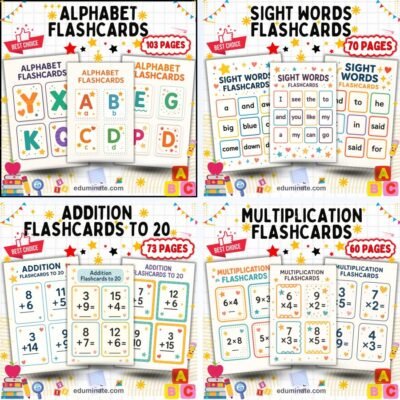
Dolch Sight Words: Word Lists by Level, Pre-Primer to 3rd
Dolch sight words are a set of 220 common service words plus 95 nouns, sorted into five reading levels from pre-primer to third grade. This guide lists the words level by level, explains how the noun list fits in, and shows how a kindergarten class can use the lists.
What are the Dolch sight words?
Edward William Dolch was an educator who gathered the words that turned up again and again in children’s books of his time. He published his list of service words in the 1930s and added a separate list of common nouns later. The service words are the small helper words that hold sentences together: pronouns, verbs, adjectives, adverbs, prepositions and conjunctions. Nouns are handled in their own list. The 220 Dolch sight words are the service words, and the 95 nouns sit in a separate list. The material is sometimes called the Dolch reading list, and it is easy to print as a set of cards.
The Dolch word list is popular because it is short, sorted by level and easy to turn into cards. A child can work through one level, show what is firm and what is not, and move on. The lists are also a handy record. A teacher can mark each word as known or not yet known, and see at a glance where to spend the next lesson.
A word of caution: the lists are tools, not tests of reading ability. A child who can read every word on a card may still struggle with a full sentence, and a child who misses a few words may read well in context. Use the lists to guide practice, and keep real reading at the center.
The Dolch word list by level
The 220 service words are split into five groups. The counts below add up to 220.
- Pre-primer: 40 words
- Primer: 52 words
- First grade: 41 words
- Second grade: 46 words
- Third grade: 41 words
The level names describe the order of reading growth that Dolch had in mind, from the first words a beginner meets to those of a third grade reader. They are a rough guide, and children move through them at different speeds. A strong kindergarten reader may be well into the primer list, and a child in first grade may still be working through pre-primer words.
Dolch pre primer sight words
The Dolch pre primer sight words are the starting point. This is the complete list of 40 words:
a, and, away, big, blue, can, come, down, find, for, funny, go, help, here, I, in, is, it, jump, little, look, make, me, my, not, one, play, red, run, said, see, the, three, to, two, up, we, where, yellow, you
Many of these words are short and sound out easily, such as “can”, “in”, “not” and “up”. Others, like “the”, “said” and “one”, need more repeated practice. A Dolch pre primer word list is a friendly size for a first set of cards, since 40 words can be split into five groups of eight.
Pre primer and primer sight words in order
Pre primer and primer sight words can be taught one after the other, with the second list adding the next layer of common words. The Dolch primer sight words make up 52 words:
all, am, are, at, ate, be, black, brown, but, came, did, do, eat, four, get, good, have, he, into, like, must, new, no, now, on, our, out, please, pretty, ran, ride, saw, say, she, so, soon, that, there, they, this, too, under, want, was, well, went, what, white, who, will, with, yes
Notice that the primer list brings in many past tense verbs (“ate”, “came”, “ran”, “saw”, “went”) and several color words. Past tense verbs like these have spellings that do not follow a single rule, so repeated reading in sentences helps them stick.
Dolch sight words for kindergarten
A common question is which levels suit Dolch sight words kindergarten classes. One simple plan is to begin with the pre-primer list and move to the primer list when the first one feels comfortable. Dolch words for kindergarten do not have to be covered in a set time, and a class can stop partway through the primer list and come back later.
A Dolch list kindergarten teachers build from the two lowest levels covers 92 words in all. That is a lot for one year if every word is expected to be firm, so a teacher may pick the words that appear most in daily reading and treat the rest as stretch words. The guide to sight words for kindergarten lays out a smaller starter list in five sets and a routine for teaching each word.
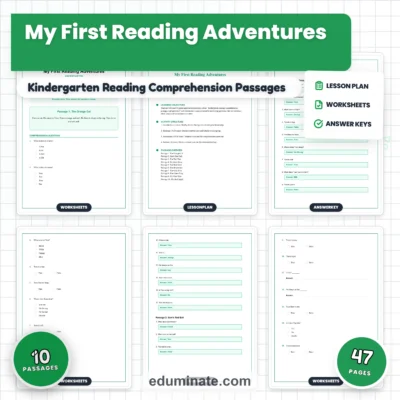
Short reading passages are a good way to see these words in action. The kindergarten reading passages and questions packet has ten early literacy texts with comprehension questions and answer keys, and it gives children practice with sight words, simple sentences and recall. For readers who also need phonics practice, the CVC reading passages add five short vowel decodable stories with a lesson plan and teacher answer keys.
Dolch sight word list: first grade
The first grade level holds 41 words. This is the complete list:
after, again, an, any, as, ask, by, could, every, fly, from, give, going, had, has, her, him, his, how, just, know, let, live, may, of, old, once, open, over, put, round, some, stop, take, thank, them, then, think, walk, were, when
First grade readers meet longer sentences and short chapters, and these words show up again and again. Several are tricky for spelling: “could”, “once”, “of” and “some” do not match their sounds in a simple way. The first grade reading passages and questions packet includes ten stories with comprehension questions and answer keys, and children practice sight words, simple sentences and recall in its pages.
Dolch sight words: second and third grade
The second grade level holds 46 words and includes words such as: always, around, because, been, before, best, both, buy, call, cold, does, don’t, fast, first, five, found, gave, goes, green, its, made, many, off, or, pull, read, right, sit, sleep, tell, their, these, those, upon, us, use, very, wash, which, why, wish, work, would, write, your.
Words like “their”, “your”, “its” and “don’t” invite practice with spelling and apostrophes, and several of them have look-alike words that are easy to mix up. The second grade passages and questions packet offers ten stories with comprehension questions, sight word practice, sentence fluency work and answer keys.
The third grade level holds 41 words. This is the complete list:
about, better, bring, carry, clean, cut, done, draw, drink, eight, fall, far, full, got, grow, hold, hot, hurt, if, keep, kind, laugh, light, long, much, myself, never, only, own, pick, seven, shall, show, six, small, start, ten, today, together, try, warm
Many of these words can be sounded out by a child who slows down, so the main work becomes fluent reading. The third grade passages and questions packet follows the same pattern: ten stories, comprehension questions, sight word and fluency practice, and complete answer keys.
The Dolch noun list
The Dolch noun list holds 95 common nouns, and it sits apart from the five service word levels. The words name everyday things, such as school, house, water, tree and table, along with family words and words for parts of the body. Because nouns carry picture meaning, children often learn them faster than the helper words, and many can be matched with real objects in the classroom.
The noun list is not divided by grade. It works as a bank of vocabulary words for labeling classroom objects, building simple sentences and practicing spelling. A child who can read a sentence like “The table is by the window” has used a noun from the noun list and several words from the pre-primer and primer levels.
How to use the Dolch word list in class
A Dolch sight word list becomes useful when it is turned into small, repeatable tasks. Here are a few ways to do that.
- Make a checklist for each child, with the words in rows. Mark each word with the date it was read correctly.
- Choose five words at a time from the unknown column. Teach them for a week, then review them with the older words.
- Put new words on cards, and keep a small box of known words that children can read to a partner.
- Write sentences that mix new words with known ones, then read them aloud.
- Look for the words in the books children are reading and in the passages they work with. Seeing a word in a real page is stronger practice than seeing it on a card.
A parent can use the same checklist at home. Pick a few words, put them on the refrigerator, and read them together during the week. If a word proves hard, make a sentence with it and say the sentence aloud.
Dolch words compared with other lists
The Dolch words are one list among several. The Fry lists order a thousand words by how often they show up in print, and they form a different view of the same idea. The guide to Fry sight words gives the first hundred words in full, and the article on high frequency words explains how any of these lists relate to sight words in general.
Many words appear on both lists, so a child who learns the Dolch pre-primer words is also learning many of Fry’s first hundred. There is no need to choose one list and drop the other. Pick the list that matches how you teach, and use the other one to fill gaps.
Frequently asked questions
How many Dolch sight words are there?
There are 220 service words in five levels, plus 95 nouns. That makes 315 words in total. The service words are the ones sorted by grade level.
Which Dolch list should kindergarten start with?
The pre-primer list is a sensible first step, since it has 40 words and many are short. The primer list comes next. A class can stay on the first list as long as needed.
Are Dolch words and sight words the same thing?
Dolch words are one set of sight words. The term sight words can also refer to the Fry lists or to a list a school builds for itself. What they share is the goal of quick, accurate word recognition.
Do children need to learn all 220 words?
The lists are a guide, not a requirement. Children pick up many of these words through regular reading and writing. The lists help you find the ones that need extra attention.
Related resources
- Kindergarten Reading Worksheets: Reading Passages, Questions and Answer Key
- Reading Comprehension Activities: First Grade Reading Passages and Questions
- Short Reading Passages: Second Grade Printable Pages, Questions and Answer Key
- Short Reading Comprehension Passages: Third Grade Questions and Answer Key
- CVC Reading Passages Worksheets for Kindergarten and First Grade