Preschool Activity Sheets: Short, Hands-On Practice Ideas
Preschool activity sheets are simple printable pages that let young children practice small skills such as naming colors, matching shapes and holding a crayon. This guide covers what belongs in a preschool printable, how to use pages without turning the day into seat work, and where cards, charts and coloring pages fit in.
For the full set in one download, the Preschool Worksheets Bundle has 22 packs and 1116 printable pages of alphabet, colors, shapes, counting and coloring.
What preschool activity sheets are, and what they are not
Three- and four-year-olds learn mostly through play, talk and movement. A page of paper is a small part of the picture. Used well, a worksheet is one more way to try an idea the child has already met with their hands and their body.
So the best preschool activity sheets have a few things in common:
- They ask for one simple action, such as circle, color, point or trace.
- They use big shapes and thick lines that small hands can manage.
- They are fine to leave half finished.
- They follow a hands-on activity, not the other way around.
If a child sorts real buttons by color on Monday, a color matching page on Tuesday feels natural. The page is a second look at something already familiar.
Skills that preschool activity sheets can support
Pre-writing skills
Before a child can write letters, the hand needs practice with the strokes letters are made from: straight lines, curves, circles and zigzags. Pages with dotted lines to follow, or paths to trace from one side to the other, give that practice. These pre-writing skills build up slowly, so repeat them often and keep each session short. Our post on fine motor activities lists many hands-on ways to strengthen the same muscles away from paper.
Colors and shapes
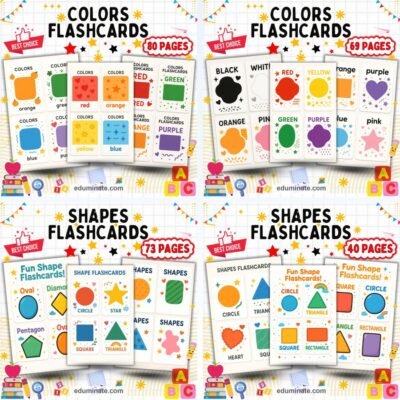
Naming colors and shapes is a common early goal. Children can point to a color, say its name and match it to an object in the room. For cards that put color and shape practice in one place, the Colors and Shapes Flashcards Bundle gathers four flashcard sets covering color cards and shape cards, in 262 pages. The Colors Flashcards packet is a 78-page set with four color cards on each page, 312 cards in all, and each card shows a color patch and the color word.
Numbers and counting
Counting aloud, touching each object once and saying the number are all early steps. Number cards give children a picture to point at. The Number Flashcards Bundle holds five flashcard sets covering number cards from 1 to 20, in 346 pages in all.
Letters
Letter practice at this age is about noticing and naming, not perfect writing. Children may trace a letter that is in their own name or match two copies of the same letter. When you are ready to go further, see our posts on letter recognition worksheets and alphabet tracing worksheets.
Coloring pages as preschool practice
Coloring is one of the most useful preschool activities, even though it looks like simple fun. Holding a crayon, choosing a color and staying inside a shape all use the hand and the eye together. A child who is not yet ready to trace a letter can still color a large shape with great focus.
Look for pages with thick outlines and large areas to fill, because small details are frustrating at this age. The Preschool Transportation Coloring Pages pack offers 33 printable pages, and its thick outlines make coloring trucks, cars and boats easier for small hands.
Coloring pages also help in a quiet corner. After a busy morning, a page and a few crayons give a child a calm way to reset. Our guide to art activities for preschoolers has more ideas for creative time.
Posters and charts for the preschool room
Not every printable is for a child to write on. Posters and charts make the room itself a place for learning, with pictures and words children see every day.
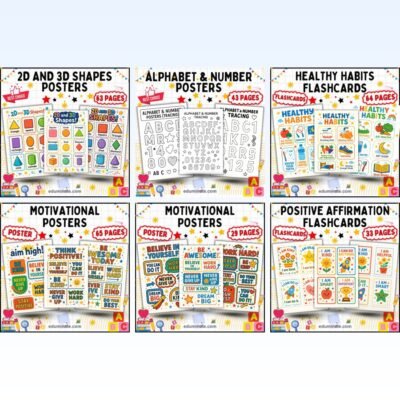
- Posters: the Classroom Posters Bundle has six poster and card sets covering shapes, alphabet and number, healthy habits and motivational posters, plus affirmation cards, in 297 pages.
- Charts: the Classroom Charts Bundle includes four chart sets covering classroom jobs charts, a weather chart and a transportation chart, in 162 pages.
A classroom jobs chart gives each child a small role, such as holding the door or passing out papers. A weather chart gives circle time a regular routine: look out the window, choose a card and put it on the board. Routines like these help a group feel settled, and they give children a reason to look at pictures and words together.
How to use preschool activity sheets without pressure
- Start with something physical. Sort, stack, build or pour first. Then offer the page.
- Show one example. Do the first item together and let the child take over.
- Offer a choice. Let the child pick between two pages or two crayon colors. Choice keeps interest high.
- Keep it short. Stop when attention fades. Come back to it another day.
- Talk about the page. Ask what the child sees. The conversation is where much of the learning sits.
- Display finished work. A page on the wall or the fridge tells a child their work matters.
Never ask a young child to redo a page because it was not neat. At this age, trying is the goal.
Cards as an alternative to paper pages
Flashcards are a good match for preschool because they are quick and flexible. They can be used in many ways without any writing at all.
- Show and name: hold up a card, say the word together and move on.
- Hide and find: place a few cards around the room and ask a child to bring back the one you name.
- Sort: ask a child to place all the cards that show a certain color in one pile.
- Match: if you print two copies, children can find the pairs.
Cards can be laminated or tucked in sleeves for repeated use, which makes them handy for a center or a take-home bag.
Using preschool printables at home
Parents do not need a classroom setup. A table, a few crayons and a handful of printed pages are enough. Choose a time when the child is rested, sit alongside and keep the mood light. Many parents find that a short page right after a snack works well, but every child is different.
Link the pages to daily life. After coloring a transportation page, point out the vehicles you see on a walk. After a counting card, count the steps to the door. These links help a child see that the ideas on the page belong to the real world.
A simple weekly rhythm
If it helps to have a shape for the week, try giving each day a light theme:
- Color day: color cards, a color sorting game and a coloring page.
- Shape day: shape cards and a hunt for shapes around the room.
- Number day: counting aloud, number cards and a counting game.
- Letter day: naming the first letter of a child’s name and tracing it.
- Free choice day: children pick any activity from the week.
The rhythm gives structure without being strict, and children enjoy knowing what to expect.
Choosing preschool activity sheets and printables
A quick check before you print can save a lot of frustration. Hold the page at arm’s length and ask a few questions.
- Is the main picture big? Tiny details are hard for young eyes and hands.
- Is there only one task? A page with three instructions is too much for most preschoolers.
- Is the paper space generous? Children need room for large movements.
- Does it fit what you are doing this week? A page works best when it connects to a topic or a hands-on activity.
- Can an adult explain it in one sentence? If not, simplify it.
Building a pre-writing path
Pre-writing skills grow in a rough order, and it helps to know the usual steps so you can offer the next one at the right time. Children often begin by scribbling freely. Next they make straight lines, then circles, then crosses and diagonals. Later they copy simple shapes. Letters come after the strokes feel comfortable.
You can support each step with more than paper. Draw big lines in sand or salt on a tray. Roll modeling clay into long snakes and then curl them into circles. Paint with a wide brush on an easel. Trace a path on the floor with tape and ask a child to walk along it. Each of these builds the same fine motor skills as a pencil page, in a way that feels like play. When a child moves from these activities to paper, the page is just one more place to try the same movement.
Setting up a small learning center
A learning center is a corner or a table where a child can work alone or with a friend. For preschool, keep it simple: a tray with a few crayons, a stack of pages, a set of cards and a small container for finished work. Rotate the materials each week so the area stays fresh. Because the pieces are printable, you can swap in a new set of cards or a new coloring page whenever you like.
Tell children how the center works with a short routine. Choose one item, use it, put it back and move on. When you model the routine slowly the first few times, children take it on quickly.
Frequently asked questions
At what age can children start using worksheets?
Many children enjoy simple pages around age three or four, as long as the task is a short, easy action such as coloring or circling. Every child is different, so follow the child’s interest.
Should preschoolers write letters on activity sheets?
Writing is not required. Many children are happier tracing lines and shapes first, and pre-writing practice can come before letters.
How many pages should we do in a day?
One or two short pages are plenty. Hands-on play should fill most of the day.
What if my child does not want to sit down?
Try another format. Cards, a coloring page on the floor or a standing activity at an easel may suit them better. Return to the page another day.