Technology Reading Comprehension Worksheets, AI and More
Technology reading comprehension worksheets give students a short nonfiction text about a modern invention, then ask questions that need evidence from the passage. They work best when each pack stays on one topic and the reading level matches the class. The packs below cover artificial intelligence, robots, drones, coding, transport and internet safety, from kindergarten to grade 8.
Passage topics you can choose from:
- Artificial intelligence, chatbots and augmented reality.
- Robots, drones and simple coding concepts.
- Self-driving cars, flying taxis, fast trains and electric aircraft.
- QR codes, smart glasses, telemedicine and prosthetic limbs.
- Internet safety, digital footprints and screen time.
What each pack contains
The product pages describe the same layout for almost every pack: 10 passages, around 40 worksheet pages, a lesson plan and answer keys. Some also list 200 questions. Page counts run from 48 to 74, and all are printable PDFs. That shared layout means a class can read through several topics without learning a new routine each time.
Artificial intelligence and smart devices
Students ask about AI before teachers have a plan for it, so AI reading passages give you a calm, text-based way to start. An AI worksheet from these packs explains how the technology works and where it shows up in daily life.
| Pack | Grades | Pages | Price |
|---|---|---|---|
| Artificial Intelligence Worksheets | 5 to 6 | 63 | $7.99 |
| AI Reading Comprehension | 4 to 7 | 74 | $8.99 |
| Chatbots Reading Comprehension | 4 to 5 | 61 | $7.99 |
| Augmented Reality Worksheets | 5 to 6 | 74 | $8.99 |
| Smart Glasses Reading Comprehension | 5 (also 4 and 6) | 48 | $5.99 |
The Artificial Intelligence Worksheets pack uses daily life passages, and the AI Reading Comprehension pack uses tutor passages with 50 worksheet pages. If your students are new to the topic, start with Chatbots, which is written for 4th and 5th grade. For classes that already discuss AI tools, the 74-page packs give more questions per passage.
Robots, drones and coding
| Pack | Grades | Pages | Price |
|---|---|---|---|
| Robots Worksheets | K to 2 | 65 | $7.99 |
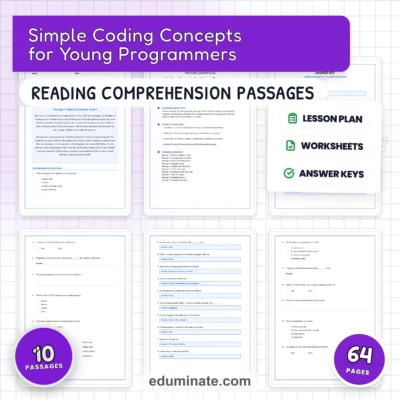
| Coding Worksheets | 3 to 5 | 64 | $7.99 |
| Delivery Drones Reading Comprehension | 3 to 5 | 63 | $7.99 |
| Drones and Their Uses Reading Comprehension | 3 to 7 | 63 | $7.99 |
Robots Worksheets is the only technology pack here for kindergarten, with simple sentences and sight words. The Coding pack uses clear analogies, so third graders can follow ideas such as steps in order without any screen. The two drone packs overlap, so most teachers need only one: choose Delivery Drones for a narrow grade 3 to 5 group, or Drones and Their Uses for a wider range.
Transport technology
| Pack | Grades | Pages | Price |
|---|---|---|---|
| Self-driving Cars Reading Comprehension | 3 to 7 | 66 | $7.99 |
| Flying Taxis Reading Comprehension | 3 to 5 | 63 | $7.99 |
| Trains Worksheets (high speed rail) | 5 to 8 | 63 | $7.99 |
| Underground Highways Reading Comprehension | 3 to 6 | 72 | $8.99 |
| Autonomous Ships Reading Comprehension | 5 to 8 | 63 | $7.99 |
| Aviation Worksheets (electric aviation) | 5 to 8 | 63 | $7.99 |
These fit a unit on how people and goods travel. For the whole topic in one download, the Transportation Reading Passages Bundle holds 10 packs and 646 pages for $52.59, covering flying taxis, maglev trains and electric cars. If your class likes space travel as well, our space coloring pages guide makes a quiet companion activity.
Everyday technology and health
| Pack | Grades | Pages | Price |
|---|---|---|---|
| Technology Worksheets | 3 to 5 | 65 | $7.99 |
| QR Code Worksheets | 3 to 7 | 64 | $7.99 |
| Online Learning Worksheets | 3 to 5 | 63 | $7.99 |
| Prosthetic Limbs Reading Comprehension | 3 to 7 | 63 | $7.99 |
| Telemedicine Reading Comprehension | 6 to 9 | 63 | $7.99 |
| Bio Concrete Reading Comprehension | 4 to 7 | 72 | $8.99 |
| Nanotechnology Worksheets | 8 | 74 | $8.99 |
The Technology Worksheets pack is a general survey, with passages on computers, phone history, internet networks, robotics, coding, drones and smart devices. It makes a good first pack if you are not sure which single topic to pick. The Nanotechnology pack has passages on nanomedicine, water filtration membranes and smart fabrics, and it is written for 8th grade.
For screen habits, the Healthy Habits Worksheets pack has 64 pages for grades 2 to 5 and covers device limits, eye rest and balanced offline activities. It costs $7.99.
Internet safety and digital citizenship
| Pack | Grades | Pages | Price |
|---|---|---|---|
| Internet Safety Worksheets | 4 to 6 | 63 | $7.99 |
| Digital Citizenship Worksheets | 4 to 6 | 48 | $5.99 |
| Cyber Safety Worksheets | 5 to 6 | 61 | $7.99 |
| Online Safety Worksheets | 6 to 8 | 65 | $7.99 |
These four cover the habits students need before they spend time online. The Internet Safety Reading Comprehension Bundle gathers 4 packs, 237 pages in all, for $22.47, covering internet safety, digital citizenship and online privacy.
Getting the whole technology set
The Technology Reading Comprehension Bundle contains 14 packs and 904 printable pages for $73.36. It covers artificial intelligence, robots and coding, among other topics. Buy it when you plan to use technology texts all year, or when several teachers share one grade.
Ways to teach with technology passages
Before reading
Ask students to write what they already know about the topic in two lines. After the passage, they add what changed. This takes five minutes and makes the learning visible.
During reading
Have students mark each paragraph with one word that sums it up. For an AI passage, words such as data, rules and training help them see the structure of the text.
After reading
- Pair students to explain the passage in their own words without looking at the page.
- Write a short pro and con list about the technology.
- Check answers with the key, then rewrite one wrong answer with proof from the text.
- Keep a class chart of new technology words.
Centers and sub plans
One passage and its questions fit a quiet center. For a sub plan, hand out a passage with the answer key, and the substitute can check work without any science background.
Choosing by grade
- Kindergarten to grade 2: Robots Worksheets, and Healthy Habits Worksheets from grade 2.
- Grades 3 to 5: Coding, Delivery Drones, Flying Taxis, Technology Worksheets, Online Learning and Underground Highways.
- Grades 4 to 7: AI Reading Comprehension, Bio Concrete, Drones and Their Uses, Self-driving Cars, QR Codes and Prosthetic Limbs.
- Grades 5 to 8: Trains, Autonomous Ships, Electric Aviation and Online Safety, with Nanotechnology at 8th grade.
Some packs sit in more than one band. The ranges above come from each product page, so check the page for the exact range before you buy.
Discussion questions for any technology passage
- Who benefits from this technology, and who might not?
- What problem was this invention made to solve?
- What could go wrong, and how could people prevent it?
- How did people do this job before the technology existed?
These questions work with every pack because they ask students to think beyond the text. Give students two minutes to write before they talk, and the discussion will be calmer and deeper.
A short project after reading
Ask students to design a poster for a new gadget in the topic they read about, using three facts from the passage to explain how it works. They label the parts and add one safety rule. A paper poster needs no device, and it gives you a quick way to see which facts students understood. Older students can write a one-paragraph product review that names one strength and one limit.
Frequently asked questions
Are these AI worksheets suitable for younger students?
The AI packs are written for grades 4 to 7. For younger children, the Robots pack (kindergarten to grade 2) and the Coding pack (grades 3 to 5) are the nearest match.
Do the packs need a device?
No. They are printable PDFs with passages and written questions, so students read on paper.
Which pack should I try first?
The Technology Worksheets pack covers many topics in one set. If you want a single subject, choose by topic and grade from the tables above.
Do the packs include answer keys?
Yes. Every pack described here lists answer keys and a lesson plan.