
ELA Worksheets for 4th Graders: How to Plan Practice

English language arts in third and fourth grade covers a lot of ground. Students are reading longer chapter books and articles, writing paragraphs that hold together, learning grammar by name and building vocabulary from Greek and Latin word parts. A good set of ELA worksheets can support all of it, but only if you know what each page is for and where it fits in your week.
This article walks through what ELA practice includes in grades 3 and 4, what changes between the two years, how to choose ELA worksheets for 4th graders and 3rd graders, and a way to plan them so they support your reading and writing lessons instead of crowding them out.
What ELA covers in 3rd and 4th grade
The Common Core State Standards, which many states use or have adapted, split English language arts into a few strands. Your state’s names may differ, but the content is similar:
- Reading literature: stories, poems and plays. Retelling, character, theme, point of view.
- Reading informational text: articles, textbooks, how-to texts. Main idea, key details, text features, comparing two texts.
- Foundational skills: decoding longer words and reading with fluency.
- Writing: opinion, informative and narrative pieces.
- Speaking and listening: discussions, retelling, presenting.
- Language: grammar, punctuation, spelling and vocabulary.
Worksheets fit some strands better than others. They work well for language skills, vocabulary, short reading passages with questions, and planning pages for writing. They are a poor fit for fluency and discussion, which need reading aloud and talking.
ELA worksheets for 3rd graders: what to practice
Third grade is a bridge year. Many students are moving from learning to read toward reading longer texts on their own, and the practice should support that move.
Reading
Third graders retell stories, including fables, folktales and myths, and work out the central message or lesson (Common Core, Reading Literature, Grade 3). They describe characters and explain how their actions move the story along. In informational texts, they find the main idea and the details that support it, and use text features like headings and captions to find information quickly.
Useful worksheet types: a short passage with three to five questions, a story map, a main idea and details organizer, and sequencing tasks where students put events in order.
Words and spelling
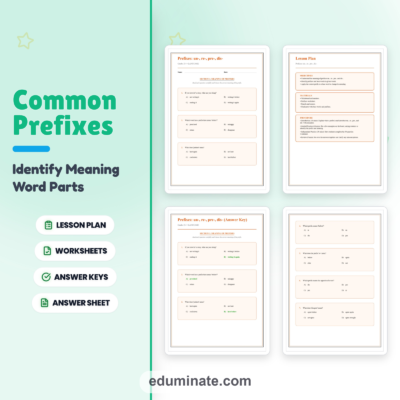
Third graders learn common prefixes and suffixes (re-, un-, -ful, -less) and decode multisyllable words. Word-building pages, where students add a prefix and write what the new word means, are short and effective.
Grammar and writing
The grammar list is long in third grade: parts of speech, plurals, verb tenses, subject-verb agreement and joining sentences with conjunctions. In writing, students learn to state an opinion and give reasons, write a simple informative paragraph and tell a story in order. We cover the grammar side in detail in our guide to grammar worksheets and a weekly grammar routine.
What changes in 4th grade
Fourth grade raises the bar in a few specific places. Knowing them helps you choose ELA worksheets for 4th graders that actually stretch them.
From central message to theme
Third graders find the lesson of a fable. Fourth graders determine a theme of a story, drama or poem from details in the text and summarize it (Grade 4 standards). The difference is that a theme is often not stated anywhere, so students have to point to details that show it. Look for pages that ask “Which sentence from the story shows this?” rather than only “What is the theme?”
Summaries that stay short
Summarizing is hard because students want to include everything. A good fourth grade page limits space: “Summarize this passage in two sentences.” The limit forces them to pick what matters.
Writing with reasons and facts
Fourth grade opinion writing asks students to group related ideas, support reasons with facts and details, and link them with phrases such as for instance and in addition. Planning organizers are very useful here: one box for the opinion, one per reason, lines for evidence under each.
More precise language
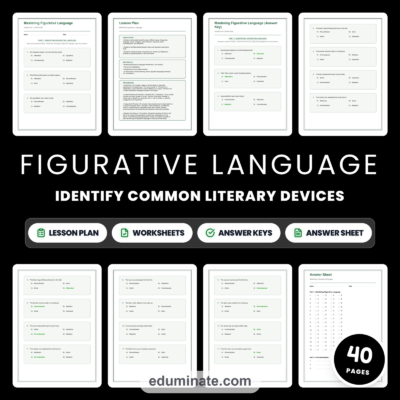
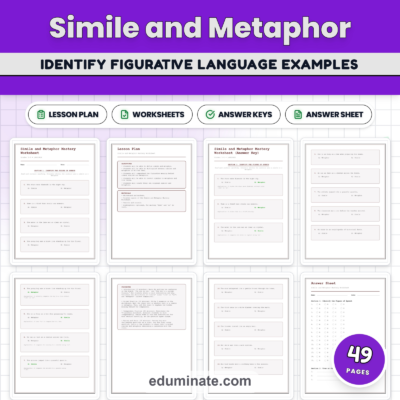
Grammar in fourth grade adds relative pronouns (who, which, that), progressive tenses, helping verbs like can and must, and fixing fragments and run-ons. Vocabulary moves toward Greek and Latin roots (tele, photo, graph) and figurative language such as similes and idioms.
How to choose a good ELA worksheet
A quick check before you print saves time later. A page is worth using if:
- It has one clear target you can name in a few words, such as “find the main idea” or “use commas in a series”.
- Reading questions send students back to the text. “Underline the sentence that tells you” is better than a question they can answer from memory.
- There is room to write. Fourth graders need more than one line for a written answer.
- The passage length fits the time you have. A two-page passage with ten questions is a whole lesson, not a warm-up.
- An answer key is included, or the answers are quick to check.
Planning ELA practice: a simple weekly cycle
The easiest way to keep worksheets useful is to give each one a job in your week. Here is a cycle that fits alongside a regular reading and writing block. Each practice slot is 10 to 20 minutes.
Monday: vocabulary and word work
Introduce five to eight words from the week’s reading, or a prefix or root. Students complete a short word-building or matching page, then use two of the words in their own sentences.
Tuesday: reading skill practice
After your reading lesson on the week’s skill (for example, main idea), students read a short passage and answer a few questions that practice that skill only.
Wednesday: grammar
One grammar skill, short practice, then students apply it to a sentence they write. Keep the same grammar skill for the whole week.
Thursday: writing plan
Students use an organizer to plan a short piece connected to the week’s reading. An opinion about a character, an informative paragraph about an animal from the article, or a new ending to the story.
Friday: apply and review
Students write the paragraph they planned, then reread it for the week’s grammar skill. Finish with a short mixed review: two vocabulary items, one reading question and one grammar item from an earlier week.
Across a month, this cycle gives you four rounds of each type of practice. If you notice the class struggling with one skill, repeat that week’s focus instead of moving on. That flexibility is the main advantage of planning by week rather than following a fixed book page by page.
Grouping and support
In a typical third or fourth grade class, reading levels can vary a lot. A few ways to use the same worksheets across a range of readers:
- Read the passage aloud to a small group while others read on their own. The questions stay the same.
- Give a sentence starter for written answers: “The main idea is … I know because …”
- For students ready for more, add a question that asks them to compare this passage with another text they read this month.
- For English learners, preview the vocabulary before the passage and allow drawings or labels on planning pages.
ELA practice at home
Parents often ask how to help without repeating school. Short and regular works best: one page, two or three evenings a week, with time to talk about it. Ask your child to read one answer aloud and show you where in the passage they found it. That habit of pointing to the text is one of the most useful reading skills in both grades.
Reading together still matters more than any worksheet. If you only have 15 minutes, spend it reading a book your child enjoys and talking about it.
Where our worksheets fit
If you are building a set of pages for the year, our ELA worksheets and grammar worksheets are printable PDFs you can use for whole-class practice, small groups or homework. You can also try a few free printables before you decide.
Frequently asked questions
What is the difference between 3rd and 4th grade ELA?
Fourth grade asks for more independence and precision. Students move from finding a story’s lesson to working out an unstated theme, write summaries and opinion pieces supported by facts and details, and add grammar such as relative pronouns and progressive tenses.
How long should ELA worksheet practice take each day?
For most practice pages, 10 to 20 minutes is plenty. Longer reading passages with written answers can take a full lesson, so plan those for days when the worksheet is the main activity.
Can worksheets replace a reading curriculum?
No. Worksheets are good for practicing specific skills, but students also need to read whole books, discuss them and write longer pieces. Use worksheets to support those activities, not to replace them.
My 4th grader reads well but struggles with written answers. What helps?
Sentence starters and a “restate, answer, prove” pattern help a lot: restate the question, give the answer, then quote or point to a detail from the text. Practice it with short questions until it becomes automatic.