Sight Word Flashcards: Printable Cards and Ways to Use Them
FreeTry a printable pack for free first. No card needed.See free packs
Sight word flashcards help early readers recognize the short, common words they meet on almost every page, so they read faster and with more confidence. A good set has one clear word per card in big print, no picture to guess from, and enough repeats that a child sees each word many times. Short rounds of five or six cards work better than a long drill.
Here are ways to use a set of sight word cards:
- Hold up a card and ask the child to read it, then sort it into a know pile or a not yet pile.
- Lay out four cards and ask the child to touch the word you say.
- Print two copies of a page and play a memory game by matching pairs.
- Build short sentences on a table with cards such as I, see, the and big.
- Use one card as an exit ticket: the child reads it before lining up.
In this article (8 sections)
What makes a good set of sight word flashcards
Sight words, also called high frequency words, are words that children are asked to learn by sight because they show up so often. Some follow regular letter sounds and some do not, so teachers usually mix practice with phonics. When you choose a set, look for these things:
- One word per card, in large, plain letters that are easy to read across a table.
- No picture clues, so the child reads the word itself and does not guess from an image.
- Words that repeat across pages, which gives practice without extra printing.
- A mix of small words and longer words, so children can move up in steps.
- Pages that can be printed one at a time, so a small group or a single child can use one page.
Free sight word flashcards
Many parents and teachers search for free sight word flashcards. At the time of writing, our shop does not have a free sight word flashcard pack. If you need something today, you can write five words in thick marker on index cards and start from there. When you use a free pack from our shop on another theme, remember that a free pack takes an email address, which opens a free account and keeps the file in My Library.
The printable sight word flashcards packet
The Sight Words Flashcards packet costs $8.99. It is a single PDF with 70 pages for kindergarten and 1st grade, and the product page says its A4 pages print on US Letter with Fit to page. Here is how the file is laid out:
- Page 1 is a name page with lines for name, class and date.
- Pages 2 to 69 are 68 card pages. Each holds between 4 and 12 word cards.
- Page 70 is a thank you page.
Every card shows one word and no picture. Some pages have 4 large cards for the biggest print, and others have 9 to 12 smaller cards so you can fit more words on one sheet. The page borders use rounded boxes in orange, blue, green, yellow or black, or plain soft squares, with stars, hearts and dots at the edges.
The words on the cards include small ones such as a, I, in, is, it, to, he, we and up; common ones such as and, the, you, can, big, see, for, was, said and look; and longer ones such as away, blue, come, down, find, funny, help, here, jump, little, play, they and with. Words come back on many pages in new colors and layouts. The product page also notes that a few pages repeat a word or leave one card blank, so look through the preview pages before you print the pages you need.
A bigger option: the early literacy bundle
If you also teach phonics and reading, the Early Literacy Bundle has 17 packs in one download, with CVC words and sentences, decodable passages, sight words, alphabet flashcards and posters. It holds 810 pages in 41 PDF and PowerPoint files for Pre-K to 3rd grade and costs $64.10. The separate prices add up to $106.84, so you save $42.74, which is 40 percent. The sight word flashcards packet is one of the 17. The bundle also includes a 103-page alphabet flashcards pack, a 29-page vocabulary flashcards pack and a 39-page classroom commands flashcards pack.
That bundle is large. If you only need word cards, the single packet is the simpler buy. Choose the bundle when you want a full year of early reading materials in one place.
How to use sight word flashcards in short rounds
Cut, sort and store
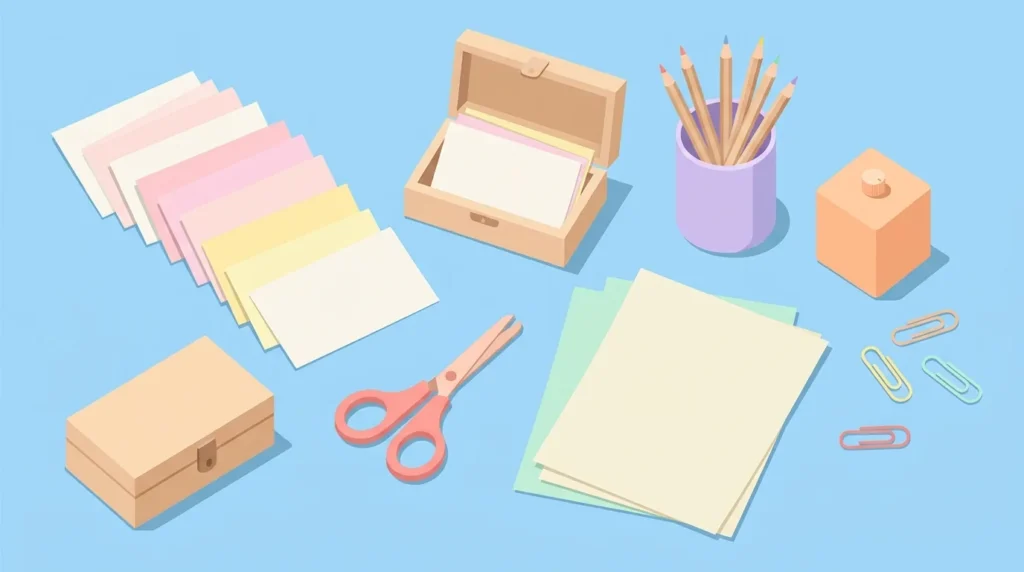
Print the pages you want and cut the cards apart along their borders. Store each page of cards in a small envelope or a zip bag, labeled with the page number. For a class, give each reading group its own envelope so cards do not get mixed up.
The two pile game
Hold up one card at a time and ask the child to read it. Words they know go in one pile, and words they miss go in another for the next round. After a week, the not yet pile should shrink, and the child can see their own progress. Keep rounds to five or six cards, and add a few new words each lesson while bringing older words back for review.
Point and find
Lay out four cards and say a word. The child touches the card that matches. This is a gentle start for children who are not ready to read each card aloud. Turn it into a listening game by whispering the word and waiting to see how quickly the child points.
Memory match
Print two copies of the same card page. Cut both apart, turn all the cards face down and take turns finding pairs. The child reads each card as they turn it. This works well for a center, since two children can play together without a teacher.
Build a sentence
Choose cards that make the start of a simple sentence, such as I, see, the and big, and let the child finish it with a drawing or a written word. Place the cards in a row and read them together. Then swap one card to make a new sentence. This links word recognition to real reading.
Fitting cards into the school day
- Warm-up: one page of four large cards at the start of reading time.
- Reading center: a bag of cards, a pencil and a recording sheet where children write the words they got right.
- Early finishers: a memory match game kept in a folder.
- Line-up: each child reads one card before leaving the room.
- Home practice: send one cut page home in an envelope and ask for two minutes a night.
- Sub plans: a stack of printed pages with simple directions leaves a substitute with an easy activity.
Tips for kindergarten and 1st grade
Kindergarten
Start with the pages that have 4 large cards and small words such as a, I, in and it. Practice one page for a week before you move on. Praise effort, and let children point at the letters with a finger as they say the word.
First grade
Move to pages with 9 to 12 cards and longer words such as little, funny and they. Ask children to use a card word in a spoken sentence, then to write that sentence. If a word keeps causing trouble, give it its own card and put it at the top of the pile.
Support for slower progress
Some children need more repeats than others. Keep the group small, use fewer cards and review the same words for several days. Short and happy beats long and tiring. If a child is still struggling after weeks of practice, talk to the reading specialist at your school. For a longer reference list of words by grade, see our guide to Dolch sight words.
Frequently asked questions
How many sight word cards does the packet have?
The PDF has 70 pages. Pages 2 to 69 are the 68 card pages, and each holds 4 to 12 cards. Words repeat across pages.
Are there pictures on the cards?
No. Each card shows only the word, in large letters. The pages have stars, hearts and dots around the edges, but no pictures tied to the words.
What grades is the set made for?
The product page lists kindergarten and 1st grade. It also suits parents and tutors who want plain word cards for practice at home.
Can I print only a few pages?
Yes. Every card page stands alone, so you can print a page for a small group or the whole set. The preview pages show the layouts before you buy.