Science Reading Comprehension Worksheets by Topic
Science reading comprehension worksheets pair a short nonfiction passage with questions that make students go back to the text for answers. The best sets cover one topic at a time, give a mix of question types, and include an answer key so you can mark quickly. The packs below each hold 10 passages on a single subject, and they run from grade 1 to grade 8.
Here are the topics you can cover with them:
- Natural events such as avalanches, glaciers, tornadoes, volcanoes and earthquakes.
- The human body, from the five senses to body systems, fingerprints and dental health.
- Living things, including mushrooms, carnivorous plants and pearls.
- How things are made and built, such as chocolate, dams and bridges.
- Navigation and the sea, with compasses, submarines and shipwrecks.
In this article (13 sections)
- What is inside each science pack
- Earth science: weather events and moving ground
- Polar regions
- The human body
- Plants, fungi and pearls
- How things are made and built
- Navigation and the sea
- How to use a science passage in class
- Which pack for which grade
- A vocabulary routine that works with any pack
- Turning a passage into a short write-up
- Using the answer key well
- Frequently asked questions
What is inside each science pack
Most packs on this page follow the same layout, according to their product pages: 10 reading passages, about 40 worksheet pages, a lesson plan and answer keys, delivered as one printable PDF. Page counts run from 48 to 74, because the answer keys are counted in. Questions ask students to find details, explain cause and effect and use vocabulary from the passage.
Because every pack has the same structure, a class can move from one topic to the next without learning a new routine. That is a real saving in the first weeks of a unit.
Earth science: weather events and moving ground
These packs suit units on weather, landforms and natural hazards. Students read about how each event forms and what people do to stay safe.
| Pack | Grades | Pages | Price |
|---|---|---|---|
| Avalanche Reading Comprehension | 3 to 8 | 63 | $7.99 |
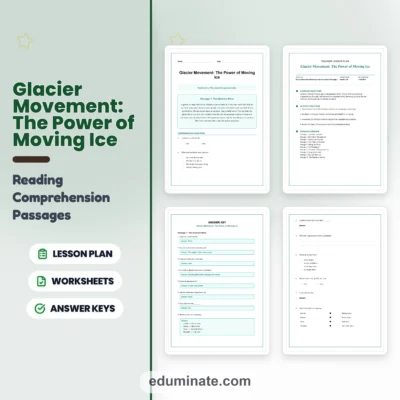
| Glacier Worksheets | 4 to 8 | 63 | $7.99 |
| Tornadoes Worksheets | 3 to 7 | 64 | $7.99 |
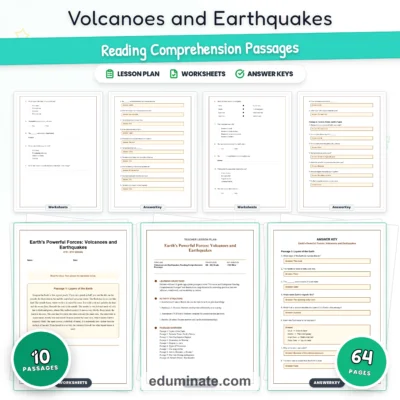
| Volcanoes Worksheets | 4 to 6 | 64 | $7.99 |
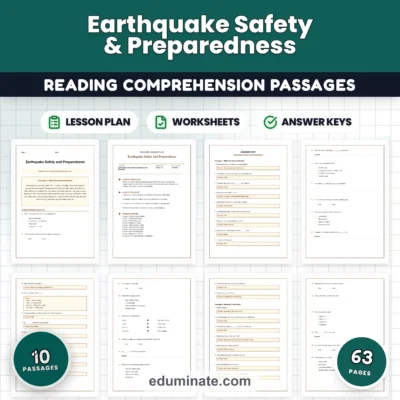
| Earthquake Worksheets | 3 to 7 | 63 | $7.99 |
| Quicksand Science Reading Comprehension | 3 to 8 | 63 | $7.99 |
If you teach a weather unit first, our weather worksheets guide covers clouds, rain and seasons, and these hazard packs make a natural next step.
Polar regions
The Polar Regions Worksheets pack has 62 pages for grades 2 to 6 and costs $7.99. It compares the Arctic and the Antarctic, which is a good first lesson in comparing two texts.
For a longer study, the Polar Regions Reading Comprehension Bundle holds 6 packs and 374 pages for $33.56. Its packs cover the Arctic and Antarctic, penguins, glaciers, icebergs and the northern lights, and the grade range differs from pack to pack, so check the one you plan to use.
The human body
Body topics work well because students already have questions about themselves. These five packs cover the senses, body systems, fingerprints, sleep and teeth.
| Pack | Grades | Pages | Price |
|---|---|---|---|
| Five Senses Worksheets | 1 to 5 | 68 | $7.99 |
| Body Systems Worksheets | 3 to 5 | 64 | $7.99 |
| Fingerprint Worksheets | 3 to 8 | 64 | $7.99 |
| Sleep Worksheets | 5 to 6 | 48 | $5.99 |
| Dental Health Worksheets | 1 to 5 | 62 | $7.99 |
The Five Senses and Dental Health packs are the youngest sets in this group, both starting at grade 1. The Body Systems pack lists 200 questions across its 10 passages. The Sleep pack is the smallest and cheapest, with 31 worksheet pages, a 16 page answer key and a 1 page lesson plan. Its page is written for 5th and 6th grade, and it covers sleep stages, why missed rest affects attention and healthy bedtime habits.
Plants, fungi and pearls
- The Mushroom Worksheets pack has 64 pages for grades 3 to 7 and costs $7.99.
- The Carnivorous Plants Reading Comprehension pack has 64 pages for grades 2 to 6 and costs $7.99.
- The Pearl Reading Comprehension pack has 64 pages for grades 2 to 6 and costs $7.99.
These suit a life science unit on how different living things get what they need. Ask students to write down one fact from each passage that surprised them, then share in pairs.
How things are made and built
| Pack | Grades | Pages | Price |
|---|---|---|---|
| Chocolate Worksheets Pack | 2 to 6 | 64 | $7.99 |
| Dam Construction Reading Comprehension | 3 to 7 | 63 | $7.99 |
| Bridges Worksheets | 2 to 6 | 63 | $7.99 |
The chocolate pack follows the process from cacao bean to bar, which makes it a good model for teaching sequence words. The dam and bridge packs fit an engineering or STEM week, where students can sketch a bridge after reading and test it with paper and tape.
Navigation and the sea
| Pack | Grades | Pages | Price |
|---|---|---|---|
| Compass Reading Comprehension | 2 to 7 | 64 | $7.99 |
| Compass Worksheets | 2 to 6 | 63 | $7.99 |
| Submarine Worksheets | 3 to 7 | 65 | $7.99 |
| Shipwrecks Reading Comprehension | 3 to 7 | 74 | $8.99 |
The two compass packs are separate products on the same subject, so you only need one of them. The Shipwrecks pack is the largest on this page, with 50 worksheet pages, a lesson plan and answer keys.
How to use a science passage in class
A three-day routine
- Day one: read the passage together, and ask students to underline two facts.
- Day two: students answer the questions alone, and must point to the line that proves each answer.
- Day three: check with the answer key, then write one new question about the topic.
Text evidence habits
Ask students to number the paragraph where they found each answer. This one habit makes weak readers slow down and shows you where they get lost. It also prepares them for tests that ask them to cite the text.
Centers, early finishers and sub plans
One passage and its questions fit a center with no teacher support. Keep a folder of finished passages for early finishers, and leave a passage with the answer key as a sub plan, since the key lets a substitute check the work.
Linking reading to hands-on science
After the volcano passages, students can sort facts into what happens before, during and after an eruption. After the senses pack, run a quick station with a mystery bag and a smell jar. Reading first gives them words to describe what they notice.
Which pack for which grade
Grade ranges overlap a great deal, so it helps to think in bands.
- Grades 1 to 3: Five Senses, Polar Regions, Carnivorous Plants, Pearl, Chocolate, Bridges, Compass and Dental Health all start at grade 1 or 2.
- Grades 3 to 5: Body Systems, Volcanoes (4 to 6), Earthquake, Tornadoes, Mushroom, Dam Construction, Submarine and Shipwrecks all include these grades.
- Grades 5 to 8: Avalanche, Glacier, Quicksand, Fingerprint and the Sleep pack reach the upper end of the range.
If you teach a mixed-age room, choose a pack whose range covers your whole group, such as Avalanche or Quicksand at grades 3 to 8. Weaker readers answer the early questions, and stronger readers go on to the harder ones in the same packet.
A vocabulary routine that works with any pack
Science passages carry words students rarely meet in stories. Before reading, write five of them on the board and ask students to guess what they mean from the topic. After reading, they return to the same words and fix their guesses. Keep a running list on the wall, and add three new words after each passage. By the end of a unit, a class that began with a few words has a working glossary of its own.
Turning a passage into a short write-up
After students finish the questions, ask for a four-sentence summary: what the topic is, one cause, one effect and one fact that surprised them. This writing task takes about ten minutes and shows whether students understood the text beyond the multiple choice items. Younger students can draw a labeled picture and write one sentence under it. Collect the write-ups in a class science folder, and you will have a record of progress for the term.
Using the answer key well
The answer key is for you, but it can also be a learning tool. After students check their own work, ask them to find one answer they got wrong and rewrite it with a line from the passage. Students who fix their own errors remember the content better than students who only see a score. Keep the key out of sight for the first attempt, then hand it out for checking.
Frequently asked questions
Which grades do these science worksheets suit?
The packs cover grade 1 to grade 8. Each product page lists its own range, and the tables above show them side by side so you can pick by grade.
Do the packs include answer keys?
Yes. Each pack described here lists answer keys inside the PDF, along with a lesson plan.
Can I use one pack for a mixed-ability class?
The ranges are wide, such as grades 3 to 8. Younger or weaker readers can do the first questions on each passage with a partner, while stronger readers answer on their own and then write an extra question.
How many passages are in a pack?
Every pack on this page has 10 reading passages. The page counts differ because worksheets and answer keys vary a little.