Winter Activities for Preschoolers: Easy Snow and Art Ideas
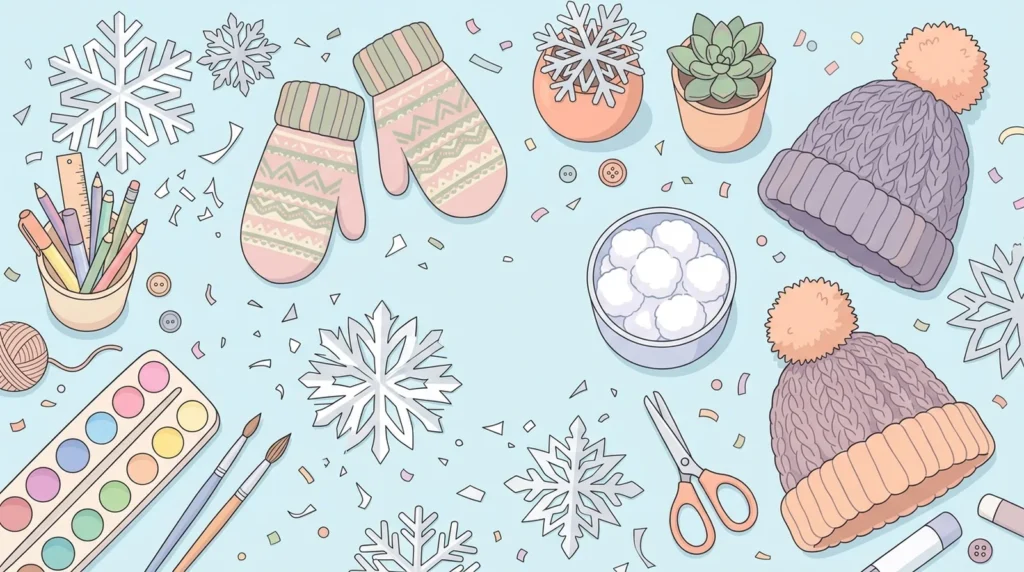
This page has winter activities for preschoolers that are short, hands-on and made from things you already have. You will find ideas for snow play, art, simple science and cold-day indoor time, plus a one-week plan.
Winter activities for preschoolers: keep it simple
Winter means cold air, darker afternoons and, in some places, snow. Children can talk about all of it: what they wear, how the air feels, what looks different outside. Open-ended materials such as paper, paint, cotton balls and ice let children explore at their own pace, so you do not need a finished craft to call the activity a success.
Some points to settle before you start:
- Dress children for the cold before any outdoor play.
- Adults should supervise any play with ice or water.
- Check for allergies before using sensory bins.
- Many places do not get snow. Swap in paper snow, cotton balls or white paper scraps, and the ideas below still work.
Snow activities
Snow activities start with looking closely at snow itself. If you have snow, scoop some into a tub and let children touch it, pack it and describe it. If you have none, use cotton balls or torn white paper as pretend snow.
Snow in a tub
On a cold day, bring a tub of snow to a table outdoors or in a cool entryway. Give children scoops, spoons and small cups. Indoors, the snow will melt fast, which is part of the lesson.
Footprints and tracks in the snow
Take a walk after a snowfall. Look at the marks left by boots and shoes, and ask children to compare them: which is bigger, which has a pattern? Back inside, they draw the marks they saw.
Measuring snow with a ruler
Push a ruler straight down into an even patch of snow and read the number where the surface meets it. Children can measure snow in different spots and say which spot is deepest.
The same ideas work as snow day activities at home: a bucket, a ruler and a few measuring cups are enough.
Winter science and STEM activities
Winter science experiments need very little: ice, water, salt and a tray. The goal is to watch and to wonder, so ask children what they think will happen before each test.
A simple routine works for every experiment. First, children say what they think will happen. Next, they run the test while you watch together. Last, they say what they saw and whether it matched their idea. A guess that turns out wrong is still a good result, because it gives the class something to talk about.
Ice melting race
Set out three ice cubes of the same size on three plates. Leave one alone, sprinkle salt on one, and pour warm water over the third. Children watch which melts first. Salt lowers the temperature at which ice melts, and warm water carries heat to the ice. Keep everyone’s hands off the cubes, since body heat would also melt them.
What melts first
Put ice cubes in different places: a sunny windowsill, a shady shelf and a bowl of cold water. Children predict which will melt fastest, then check every few minutes. Warmer places melt ice faster than cold ones.
Build an igloo from sugar cubes or blocks
Winter stem activities can be building challenges. Stack sugar cubes or white blocks in a ring, then build each layer a little closer to the middle so the layers curve inward into a dome. Tell children that the cubes are for building, not for eating.
For snow science experiments, fill a clear cup with snow and mark the level on the outside. Bring it inside and let it melt. Mark the new level of the water. Children compare the two marks and talk about what changed.
Winter art activities for preschoolers
The best winter art activities for preschoolers are about the process, not a perfect result. Let children choose their colors and decide when they are done. Our post on art activities for preschoolers has more ideas that work in any season. These winter art projects need only simple supplies.
Salt painting on a snowflake shape
Cut a snowflake shape from heavy paper. Brush white glue over it, sprinkle salt on top and tap off the extra. Then touch watery blue paint to the salt and watch it spread.
Cotton ball snow scene
Glue cotton balls onto dark blue paper to make drifts of snow. Add torn paper trees and cut-paper hills for a quiet winter landscape.
White crayon resist with blue paint
Draw on white paper with a white crayon, pressing hard. Paint over the page with watery blue paint, and the crayon marks appear because wax pushes the paint away.
Torn paper winter trees
Draw a bare trunk and branches, then have children tear brown, white and gray paper and glue it on to build the tree. Winter crafts for preschoolers like this one keep small hands busy, since tearing paper takes finger work.
January art activities for preschoolers
January art activities for preschoolers can be quiet and low prep. Three ideas:
- Paper scarf patterns: give children strips of paper in two or three colors and ask them to lay out a repeating pattern, such as blue, white, blue, white, then glue it onto a longer strip.
- Mitten matching: cut pairs of paper mittens and decorate each pair with the same pattern of stripes, dots or zigzags. Mix them up and have children find the matching pairs.
- Paper winter hat collage: draw a hat shape and let children fill it with scrap paper in any colors and patterns they like.
Winter indoor activities
Winter indoor activities fill the hours when it is too cold to go out.
Sort pom-poms with tongs
Put pom-poms in a bowl and give children tongs to move them into cups by color. The squeezing takes finger strength, and our post on fine motor activities has more ideas like it.
A cozy reading nook
Make a corner with a blanket, a few cushions and a basket of picture books. Children who need a break can use it, and our calm down corner ideas can help you set it up.
A winter sensory bin
Fill a bin with cotton balls, white pom-poms, silver ribbon and a few scoops. Children scoop, pour and sort. Check allergies first and supervise small pieces.
Winter activities for kindergarten
Winter activities for kindergarten can add counting and writing to the same materials:
- Count cotton ball snowballs to 20. Children count cotton balls into a bowl, then count again to check.
- A winter words bank. Build a class list of words such as snow, ice, cold, mitten and boots to use in writing.
- A mitten graph. Ask how many children are wearing mittens today, how many are not, and make a bar graph.
For early readers, winter CVC word lists offer sixty decodable words across six pages, in PDF and PowerPoint formats, for Pre-K to grade 1.
Winter theme preschool plan
This one-week winter theme preschool plan uses the ideas above.
| Day | Activity | Materials |
|---|---|---|
| Monday | Winter walk, then draw what you saw | Warm clothes, paper, crayons |
| Tuesday | Snow in a tub, or cotton ball snow | Tub, scoops, cotton balls |
| Wednesday | Salt painting on a snowflake shape | Glue, salt, blue paint |
| Thursday | Ice melting race | Ice cubes, salt, warm water, plates |
| Friday | Mitten matching, then a cozy story time | Paper mittens, blanket, books |
Quiet printables for winter
These pages suit a quiet table. Choose by the page count and grade range listed on each page.
- Snowflake coloring pages: 100 pages with cute smiling ice crystals, swirling snow and stars, for preschool to grade 3.
- Winter snowflake coloring pages: 33 pages with faceted crystals, radial mandalas and icy patterns, for kindergarten to grade 5.
- Snow day coloring pages: 22 pages with downhill sledding, snowball forts and cozy cabin fun, for preschool to grade 3.
Practice material
For reading, winter reading passages has 74 pages, with ten seasonal texts on snow science and winter animals, for grades 2 to 5. Second grade winter reading passages is a 59-page set of ten seasonal stories practicing sight words, sentence fluency and recall. Snow and ice reading passages has ten texts on winter weather and freezing states of matter, across 72 pages, for grades 1 to 5. All three come with answer keys.
Frequently asked questions
How long should a preschool activity last?
There is no fixed length. Plan something short, watch the children, and stop or extend based on their interest. Have a simple follow-up ready for children who finish early.
What if there is no snow where we live?
Use cotton balls or torn white paper instead. Most of the art, science and counting ideas here do not need real snow.
Can I do these at home?
Yes. Every activity uses ordinary supplies, and a kitchen table works as well as a classroom.
Is there a free winter printable?
Yes. Free winter reading comprehension passages is a 40-page packet with ten detailed seasonal texts on snow science, winter animals and weather, with answer keys, listed for grade 4.
Related resources
- Snowflake Coloring Pages 100 Cute Winter Crystal Art Activity Worksheets Sheets
- Winter Snowflake Coloring Pages 33 Geometric Ice Crystal Art Worksheets Sheets
- Snow Day Coloring Pages Winter Blizzard Fun Activity Sheets Pack for Kids
- CVC Word Lists: Winter Phonics Worksheets for Pre-K and Kindergarten, 6 Pages
- Winter Worksheets, Reading Passages with Questions and Answer Key, 74 Pages
- Winter Reading Activities, Second Grade Winter Reading Passages and Questions
- Snow Worksheets: Reading Comprehension Passages with Answer Keys, Grades 1-5
- Free Winter Reading Comprehension Passages and Seasonal Literacy Worksheets