Flower Activities for Preschoolers: Easy Ideas to Try
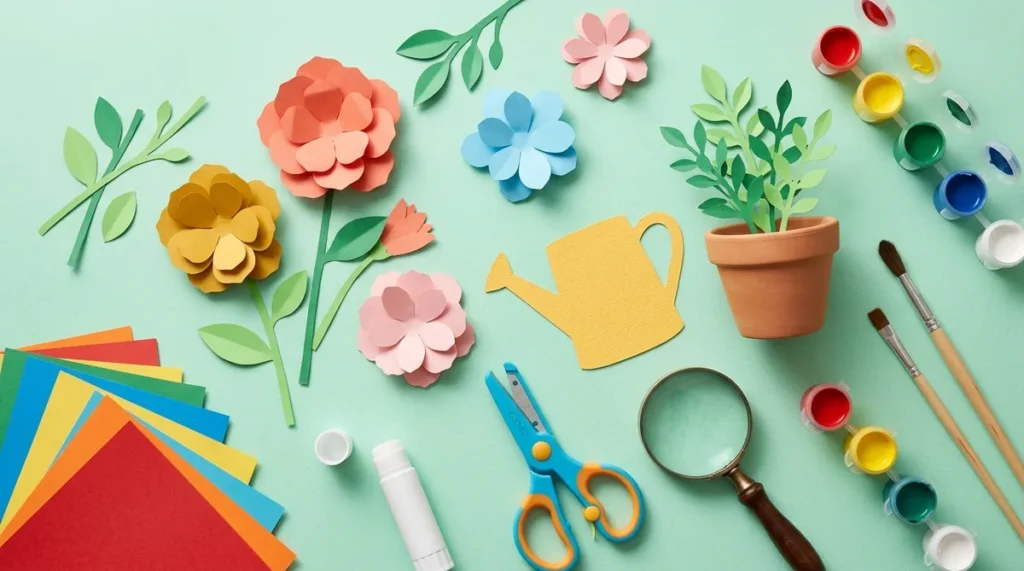
Flowers make an easy theme for young children. This article gives you flower activities for preschoolers in five groups: art, science, math, fine motor and printable pages. Each one needs everyday supplies, and most can be set up in a few minutes. You will also find a simple weekly plan, a table to compare three printable packs, and answers to common questions about age, mess and real flowers.
Why flowers work for preschool activities
Flowers are easy to find in a yard, a park or a book. They are simple to draw: a circle in the middle and petals around it. And they have clear parts that children can name: petals, a stem and a leaf. That is enough to build many small activities without any special supplies.
Flower art activities for preschoolers
Color a flower with chosen colors
Give a child a flower outline and a handful of crayons. Let the child choose the colors. A purple daisy or a blue rose is fine, because the activity is about choosing and filling, not copying real flowers.
Paint with a sponge or a fork
Dab a small piece of kitchen sponge in washable paint and press it on paper for a round bloom. For a different look, press the back of a fork into the paint and print lines that spread out like petals. Put a few drops of paint on a plate, not a full cup.
Make petals from tissue paper or torn paper
Draw a circle for the center of a flower. A child tears tissue paper or colored scrap paper into small pieces and glues them around it as petals. Tearing is easier than cutting, so even beginners can do it.
Press flowers or rub leaves, if you have real ones
If you have real leaves, put one under a sheet of paper and rub the side of a crayon across it so the veins show. Real flowers can be pressed between the pages of a heavy book and left for several days. Both are optional, and you do not need real plants for any other activity here. Stay close, and do not let children put flowers or leaves in their mouths, since some garden plants are harmful if eaten.
For more art ideas with everyday supplies, see our post on art activities for preschoolers.
Flower science activities for preschoolers
Name the parts of a flower
Draw a simple flower with petals, a stem, a leaf and roots. Point to each part and say its name, then ask the child to point to one. You can also let a child make a labeled drawing, with you writing the words.
Look at a real flower with a magnifying glass
Pick a flower you are allowed to pick, or look at one in a vase. A magnifying glass helps a child see the veins in a petal or the tiny parts in the center. Ask what the child notices and write a few of the child’s words.
Take a flower walk
A short walk in a yard or a park, with the one job of finding flowers, is an easy science activity. Look at colors, sizes and shapes, and count how many kinds you see. Leave the flowers where they grow.
Talk about what a plant needs
Plants need water and light to grow. Water a potted plant together and put it by a window. Ask: “What do you think this plant needs?” Keep the answer simple and let the child lead the talk.
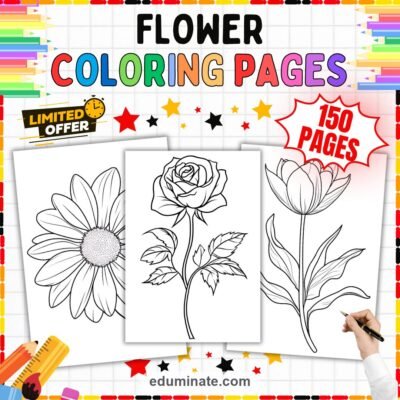
If you teach a nature unit, the Flower Coloring Pages Spring Botanical Floral Sheets are 150 pages with roses, daisies, tulips, sunflowers and spring blossoms, described in the listing as for elementary art centers, nature science and calm classroom mindfulness (Pre-K to grade 3).
Math flower activities for preschoolers
Count the petals
Draw or cut out flowers and count the petals together, touching each one as you say the number. Real flowers vary in their number of petals, so count a few and compare.
Sort flowers by color
Cut paper flowers in several colors, or use colored pages, and have the child sort them into piles. Ask: “Which pile has the most?”
Make a pattern with paper petals
Lay out petals in a repeating pattern, such as red, yellow, red, yellow. The child can say what comes next and continue it. It is a simple way to introduce patterns.
Flower fine motor activities for preschoolers
Flowers fit well with hand activities. Cut along a thick green stem with round-tip scissors, tear paper into strips, or clip clothespins around a paper circle to make petals. Each one asks for small, careful hand movements. For more ideas and a weekly routine, see our post on fine motor activities.
Printable flower activities for preschoolers
Printable pages are an easy quiet activity when real flowers are not around. Look at the outline size first: big, simple shapes are easier for new colorers than small, detailed ones. Keep a folder of pages and a cup of crayons where a child can reach them. A good habit is to pair a page with a blank sheet: color the flower, then draw the garden around it.
The product names below include the word spring, as they do in our shop. They can be used any time of year, and you can ignore the season entirely.
| Pack | Pages | Described in the listing as |
|---|---|---|
| Spring Flower Coloring Pages | 40 | Garden roses, sunflower blossoms and wild meadow cosmos |
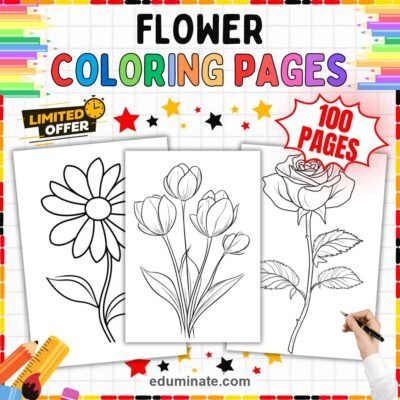
| Flower Coloring Sheets | 100 | Blooming daisies, tulip bouquets, garden roses and petals |
| Flower Coloring Pages | 150 | Roses, daisies, tulips, sunflowers and blossoms |
All three are listed for Pre-K to grade 3. The 40-page pack is the smallest, so it is a good first try. The 100-sheet pack is described as for elementary art classes, nature units and quiet table time.
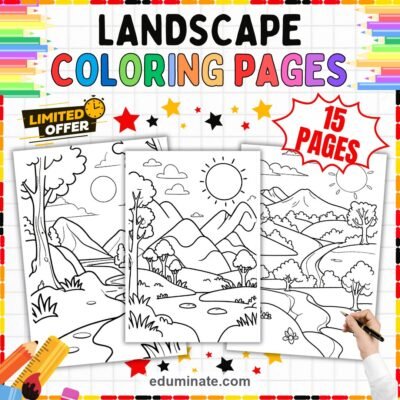
For scenery pages where a child can add flowers of their own, the Landscapes Coloring Pages are 15 pages of winding forest rivers, sunny mountain valleys and country trails (K to grade 5). The Mountains Coloring Pages are 60 pages that include wildflowers among alpine peaks and pine trees (Pre-K to grade 3).
We do not have a free flower pack, but the shop has other free printable pages you can try. For more general ideas, see our guide to printable coloring worksheets.
A simple flower activity plan
This is a sample week with one short activity a day. Swap days, repeat favorites or skip any day.
| Day | Activity | Materials |
|---|---|---|
| Monday | Color a flower | Printable page, crayons |
| Tuesday | Sponge or fork painting | Washable paint, sponge, fork, paper |
| Wednesday | Count and sort paper petals | Colored paper, scissors, glue stick |
| Thursday | Look at a real flower or a flower walk | Magnifying glass, a vase or a yard |
| Friday | Cut, tear and clip | Round-tip scissors, scrap paper, clothespins |
Practice material
Any of the printable packs above can sit alongside the activities in this plan, either as a quiet station or as a pair with a blank drawing page. Look at the preview pages on each product page before you choose, to see the outlines and the number of pages.
Frequently asked questions
What age are these activities for?
They are written for preschoolers, and most can be made easier or harder. Our printable flower packs are listed for Pre-K to grade 3. Always stay close with scissors, paint and small items.
What if we have no real flowers?
You do not need them. Use paper flowers, flower outlines, picture books or printable pages. Real flowers are only needed for the magnifying glass, the leaf rubbing and the flower walk.
How can I keep an activity short?
Set out only one or two materials and stop when the child’s interest fades. A short activity that ends well is better than a long one that does not. You can come back to it the next day.
Are there mess-free options?
Yes. Printable pages with crayons, leaf rubbings, tissue paper with a glue stick and stickers are all low-mess. Keep paint for days when you have time to set up and clean.