Ocean Theme Classroom Ideas: Decor and Reading Packs
An ocean theme classroom turns blue paper, ropes and reading nooks into a space students want to learn in. This guide covers the decor, a few ideas for bulletin boards and a reading corner, and printable reading packs on whales, coral reefs and tide pools.
Why an ocean theme works in a classroom
The ocean is a big topic with plenty of room for reading, writing and science. It also gives you an easy color scheme: blues, teals, sandy tan and white. A room in those colors feels calm.
A theme does a few helpful things:
- It gives the room one look, so boards, labels and corners fit together.
- It gives students a reason to read, since the topic comes up everywhere.
- It lets you tie decor to a science unit on oceans, water or weather.
The point is not to buy a lot. A few rolls of blue paper, some border strips and a handful of printed pages can set up the whole room.
Plan the colors and the look
Choose your colors
Pick two main blues, such as a deep navy and a soft aqua, then add sandy tan and white. Use them for boards, labels, name tags and borders. A consistent palette makes a room look planned, even when each piece is simple.
Use objects, not characters
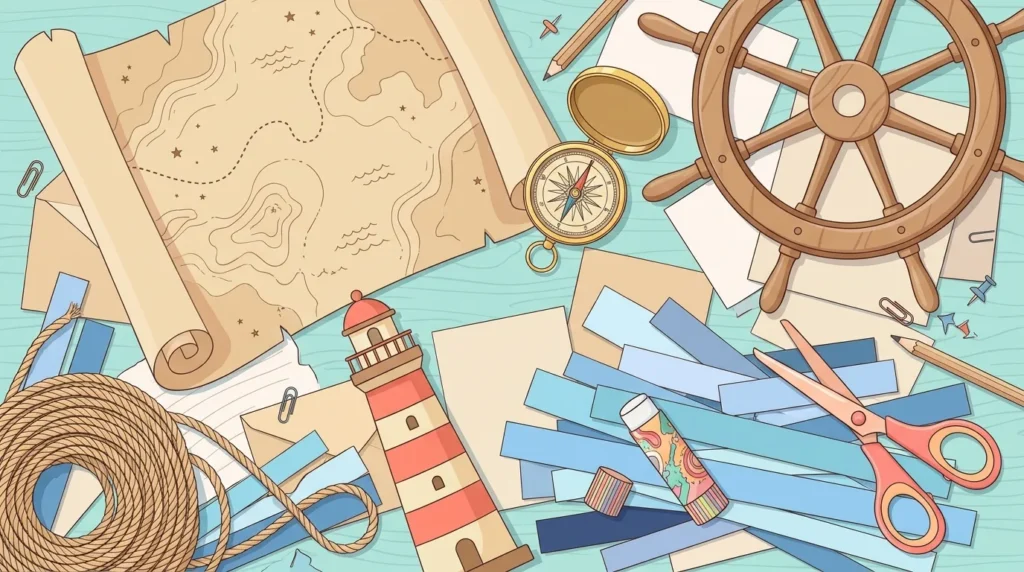
Waves, rope, anchors, compasses, ship wheels, lighthouses and maps all say “ocean” without cartoons. Cut them from paper, or print them, and use them as accents. These shapes are easy to cut and easy to read.
Keep the walls calm
Use blue paper as the base, and add a few focus points rather than covering every inch. Leave some wall space bare so the room does not feel crowded.
Ocean theme classroom decor ideas
A wave border
Cut strips of blue paper into a wavy edge and layer two shades for depth. Staple them across the top of a bulletin board, or along the wall above the whiteboard.
A door that looks like a ship
Cover the door in dark blue paper. Add a circle of brown paper for a ship wheel, with spokes cut from strips. Use the door title “Welcome Aboard” in big letters.
A lighthouse beacon
Cut a tall lighthouse from white and red paper, with a yellow beam sweeping across the board. Use it as a tracker for class goals. Each time the class meets one, add a ray to the beam.
A compass for directions
Draw a compass rose on a poster and hang it on the wall. Label north, south, east and west, and make sure the labels match the real directions in your room. It is a useful reference for map lessons.
Hanging waves
Cut long blue paper strips, curl them with a pencil, and hang them from the ceiling or from a bulletin board. They sway a little in the air and look like water.
Labels in a nautical style
Give your supply bins labels cut like rope tags or porthole circles. Use a clean font and the same border colors across the room.
Bulletin boards for an ocean theme
Bulletin boards use words and objects only in this theme, so you can build them with paper, markers and a bit of imagination.
A reading voyage board
Draw a large map with a dotted path across the water. Mark five stops with small paper flags. When the class reaches a reading goal, move a ship marker to the next stop. The board gives students a clear picture of how far the class has come.
A word wave
Cut a big wave from blue paper and fill it with vocabulary words. Each word sits on its own small wave strip. Students add new words as they learn them, and the wave grows.
A question board
Label a section “Message in a Bottle.” Students write a question about the ocean on a slip of paper, roll it, and pin it to the board. During a quiet block, pull a few questions and answer them together.
A water cycle board
Show the ocean, the clouds and the rain in a simple loop. Label evaporation, condensation and precipitation. Our post on the water cycle explains each step in plain language.
A class goals board
Draw a tall mast and add paper sails. Each sail holds one student goal. When a student meets a goal, the student adds a flag to the sail.
A reading corner by the sea
A reading corner is the part of an ocean theme classroom students may enjoy most.
- Set the base. A rug or a few cushions in blue and sand colors make a soft spot.
- Add a rope or net. Hang a length of rope along the wall, and clip ocean-related pages to it.
- Use a crate as a book bin. A wooden crate or a basket works for books on the sea, weather and water.
- Name the corner. Choose a title such as “The Harbor” or “Reading Cove,” and cut it out from tan paper.
- Add a light. A battery lamp makes the corner feel cozy.
Keep a few printed reading passages in a folder so that students can pick one up and read when they have a free minute.
Ocean reading comprehension packs
An ocean theme gets stronger when the reading matches the decor. Here are our ocean reading packs, each with passages, questions and answer keys where noted.
- The Ocean Worksheets Bundle has five reading packets in one download, covering whales, coral reefs, tide pools, ocean animals and shipwrecks. It has 333 pages.
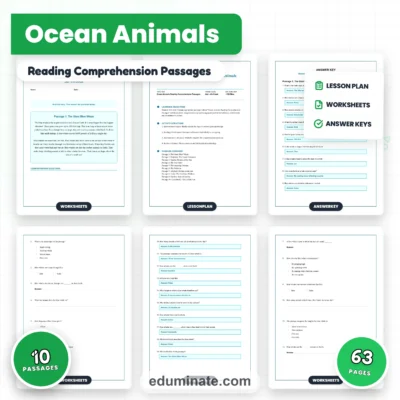
- The Ocean Animals reading comprehension packet has 63 pages with ten marine stories and 200 targeted questions, along with an answer key.
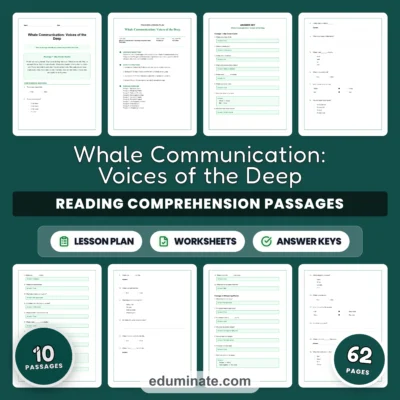
- The Whale Communication reading passages has 10 passages across 62 pages, with text dependent questions, a structured lesson plan and answer keys for grades 2 to 6.
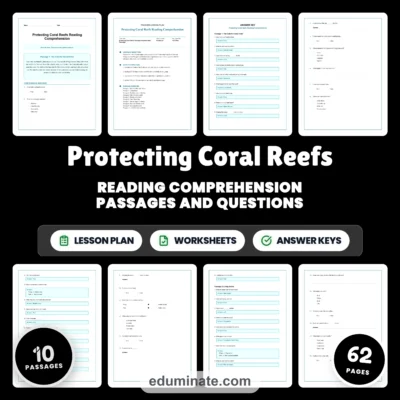
- The Protecting Coral Reefs passages has 10 passages in 62 printable pages, with student questions and answer keys for grades 2 to 6.
- The Tide Pools reading comprehension passages has 10 passages across 72 pages, with text dependent questions, a structured lesson plan and answer keys for grades 2 to 8.
- The Ocean Cleanup reading passages has ten environmental science articles across 70 pages, with 200 targeted questions on plastic removal.
Choose by grade and topic. The grade ranges above come from each product’s page, so check them before you print.
Ways to use the reading packs in class
- Whole-class read. Display one passage and read it aloud together. Stop at the end of each paragraph to ask what the class learned.
- Station work. Place a passage and its questions at an ocean reading station. Students rotate through with a partner.
- Homework. Send one passage home with its questions.
- Early finishers. Keep a folder at the reading corner with passages that students may pick up when their work is done.
- Check with the answer key. The keys save you time, and students can use them to check their own work after you review.
For ideas on how to guide students through a text, see our post on reading comprehension strategies.
Cross-curricular ideas
Science
Talk about what a tide pool is: a small pocket of seawater left among rocks when the tide goes out. Then use a tide pools passage to read about the topic in more detail.
Math
Use the ocean as a setting for story problems that involve boats and rope. For example, a rope is 12 feet long and 5 feet are cut off. How long is the rope that is left? The answer is 7 feet.
Writing
Ask students to write a letter in a bottle to a reader far away, about a day at school. Keep the letter factual and short.
Geography
Use a world map to find the oceans, and label them on a class map. Then locate the places named in the reading passages.
Environmental science
The ocean cleanup packet gives students a way to read about plastic in the water and how it is removed. Students can then write about one small thing a family can do to reduce waste.
Keeping the theme going all year
Themes can feel old after a few months. A few tricks keep the room fresh.
- Rotate the reading passages in the folder every few weeks.
- Change the voyage board’s map to a new route.
- Add new vocabulary to the word wave each week.
- Swap one board’s title when the unit changes.
When the school year ends, store the paper pieces flat in a folder labeled by board, so you can set them up again next year.
An ocean reading week plan
If you would like a simple plan, here is one way to organize a week around the reading packs.
- Day one: introduce the theme with the class map and a short read-aloud from one passage.
- Day two: students read a passage with a partner and answer the questions.
- Day three: check the answers with the key and talk about the hardest question.
- Day four: students add new words to the word wave and write a sentence with each.
- Day five: students choose a favorite passage and tell the class one fact they learned.
Adjust the plan to your schedule. If the class enjoys a passage, stay with it longer.
Whale passages and ocean pollution texts
Two of the packs make a good pair. The whale passages cover how whales communicate, and the ocean pollution texts cover plastic removal. Students get to practice with two kinds of informational text, one on sea life and one on a problem and its solution.
Ask students to compare the two. Which facts does each text give? How are the headings and details arranged? A short chart with two columns is enough to hold their answers.
Shipwrecks and stories of the sea
The bundle also includes a shipwrecks packet, which pairs well with the ship wheel door and the compass poster. Ask students to find a place on the class map where a ship might travel, and to name the direction it sails. Keep the talk about maps, ships and history.
Frequently asked questions
How do I start an ocean theme on a small budget?
Begin with blue bulletin board paper, a wavy border cut from two shades of blue, and a few printed pages. You can add more over time.
Can I build an ocean theme without animal pictures?
Yes. Waves, ropes, ship wheels, compasses, maps and lighthouses carry the theme on their own.
What grades are the reading packs for?
The whale and coral reef packs list grades 2 to 6, and the tide pools pack lists grades 2 to 8. Check each product page for the details.
How many boards do I need?
One or two are enough. A single reading voyage board and a word wave can carry the whole room.