Early Finishers Activities: 12 Ideas for a Calm Class

Every class has students who finish before everyone else. Without a plan, they chat, wander or rush through their work next time. This article gives you a simple rule for finished work and 12 early finishers activities for reading, writing, math, art and classroom jobs. It also shows how to teach the routine during the first weeks of school and how to set up the stations so they run themselves.
What early finishers need
The most useful rule is short: finished means checked. A student who says “done” has not finished until the work has been looked over. Post a short checklist:
- Read the directions again.
- Check your answers.
- Write your name on the paper.
- Put it in the tray.
- Choose an activity from the chart.
The activities themselves should meet three conditions. They are independent, so students do not need you. They are quiet, so working students are not disturbed. And they are easy to stop, so a student can put them down the moment the class moves on.
Early finishers activities by type
Here are 12 activities for early finishers. Pick a few and add more as the routine settles. Three or four choices are enough to start.
Reading
- Book box. Keep a bin of books at several levels near a quiet corner. A student picks one and reads until you call the class together.
- Read and respond. After reading, the student writes one sentence or draws one picture about the part they liked best. Keep response cards in a tray.
Writing
- Journal prompt. Put prompt cards in a box: “Describe your favorite place at school” or “Write about something you did last weekend.”
- Letter to a friend. A student writes a short letter to a classmate or a family member. Letters for family can go home in the backpack.
Math and logic
- Puzzles. A bin of jigsaw and pattern puzzles works well, as long as pieces stay in the bin.
- Number games. Roll two dice and add them, or write as many number sentences as possible for a target number, such as 10 (6 + 4, 5 + 5, 12 – 2).
Art
- Coloring. A folder of printable pages and a pouch of crayons gives students a calm choice. For a space to go with it, see our calm down corner ideas.
- Drawing. Students draw a scene from the story the class is reading, or follow a drawing prompt on a card.
Classroom jobs
- Tidy a shelf. Straighten the books or sort the pencils into the cup.
- Restock a tray. Refill the paper tray or put away materials from the last lesson.
Word work and review
- Word work. Students make small words from the letters in a long word. From classroom, for example, they can make calm, moss and room.
- Flash cards. Self-checking cards, with a question on the front and the answer on the back, work for math facts and spelling words.
Early finishers art activities
Coloring is one of the easiest early finishers art activities to run, because it needs no explanation. Keep a folder of pages and a pouch of crayons in a fixed place, and add a “finished” tray where students put completed pages. You can send them home on Friday or display a few.
Keep the rule the same as for every other choice: the work comes first. Coloring is one option on the chart, not a reward for being fast.
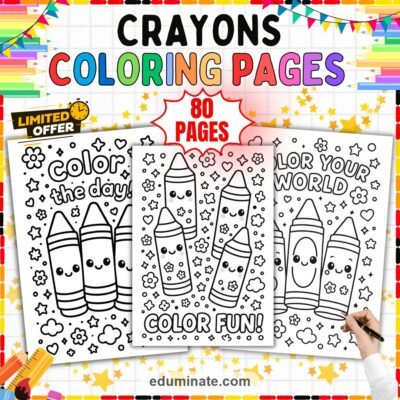
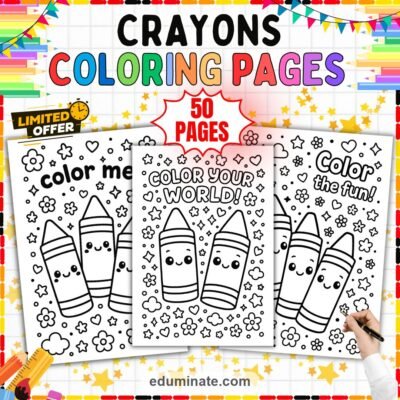
Our Crayons Coloring Pages are 80 pages of kawaii crayon characters with back-to-school themes and phrases like Color Your World (Pre-K to grade 2). The School Supplies Coloring Sheets are 50 pages of kawaii crayon characters for early learners (Pre-K to grade 2). Both are listed for younger grades, so check the preview pages before you choose them for an older class. To test the idea first, the Free Crayons Coloring Pages are a free set of 16 pages (Pre-K to grade 2).
For more low-prep ideas beyond early finishers, see our list of teaching ideas for teachers.
Back to school activities that set the routine
The first weeks of school are the time to teach the early finisher routine. Treat it like any other procedure: show it, practice it, and fix it when it slips.
- Introduce one choice a day. Demonstrate how to take out the folder, use it quietly and put it back.
- Practice the stop signal. Ask students to pause mid-activity and look at you when you give it.
- Post the checklist where students can see it from their seats.
- Walk around during early practice and name what you see: “I see three students checking their work first.”
Rules are also a good topic for early back to school activities. The Classroom Rules Coloring Pages are 50 pages with kawaii characters and four rules per page, such as Listen, Be Kind and Raise Your Hand (listed for all grades). Read one rule aloud, ask what it looks like in your room, then let students color the page. Display a few so the rules stay in view.
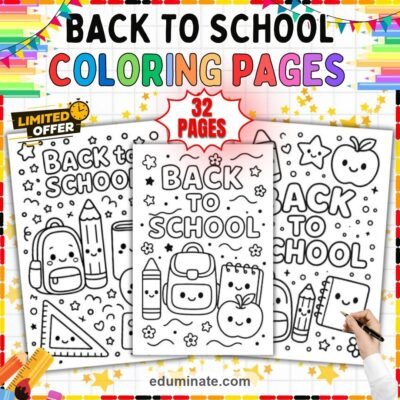
For the first week, the Back to School Coloring Pages are 32 printable pages with backpacks, pencils, crayons, books and apples (Pre-K to grade 3). They work as a quiet task while you meet students one at a time.
How to set it up
A tray or a folder for each station keeps everything in one place. This table shows a basic set-up:
| Station | Supplies | Who it suits |
|---|---|---|
| Book box | A bin of books at several levels | Students who like quiet reading |
| Writing folder | Prompt cards, lined paper, pencils | Students who like to write |
| Math and logic tray | Dice, puzzles, flash cards | Students who like numbers and patterns |
| Art folder | Printable pages, a pouch of crayons, a finished tray | Students who want a calm, hands-on choice |
| Jobs chart | A short list of small classroom jobs | Students who like to move around quietly |
Put an anchor chart on the wall with the checklist from the top of this article and the list of choices. A student who has forgotten the rules can read the chart instead of asking you.
Keeping the choices fresh
Rotate the contents of each station every few weeks, so a bin that students have seen a hundred times has something new in it. A “new this week” card on the chart tells students where to look.
Adjusting for the grade
Younger classes do best with picture-based choices and a short list. Older students can handle longer-term options: a chapter book to finish, a writing notebook with a long story in progress, a logic puzzle book or a research question to look up later. The same checklist works at every grade.
Practice material
If you want pages for several stations, the Back to School Coloring Pages Bundle has three packs and 191 pages in total. Two are back to school sets with school supplies, and one is an August summer set. Look at the preview pages first to check that the packs suit your class.
Frequently asked questions
Should coloring be a reward for finishing early?
Offering it as one choice among several, instead of a prize, gives students less reason to hurry. A choice on a chart is available to everyone who has finished and checked, not only to the first student done.
How do I stop students from rushing through their work?
Make the check part of the rule, and do not praise being first. Say “finished and checked” instead of “done.” You can also ask a student to explain one answer before choosing an activity.
What about students who never finish?
They need support, not extra activities. Try a shorter version of the task, a timer, or a partner check. A student who is never done is a different issue from one who is often done early, and it is worth talking to that student to find out what is slowing them down.
How many activities should I offer at the start?
Three or four. Teach each one before adding the next, and add more once students use the first few without help.